
Research

We are broadly interested in how disturbances (both human and natural) shape forest and treeline ecosystems, their structures, and their biodiversity. We’ve listed below some of the projects and themes we are currently working on.
Looking for opportunities to collaborate, or to joining us? Contact: [email protected]
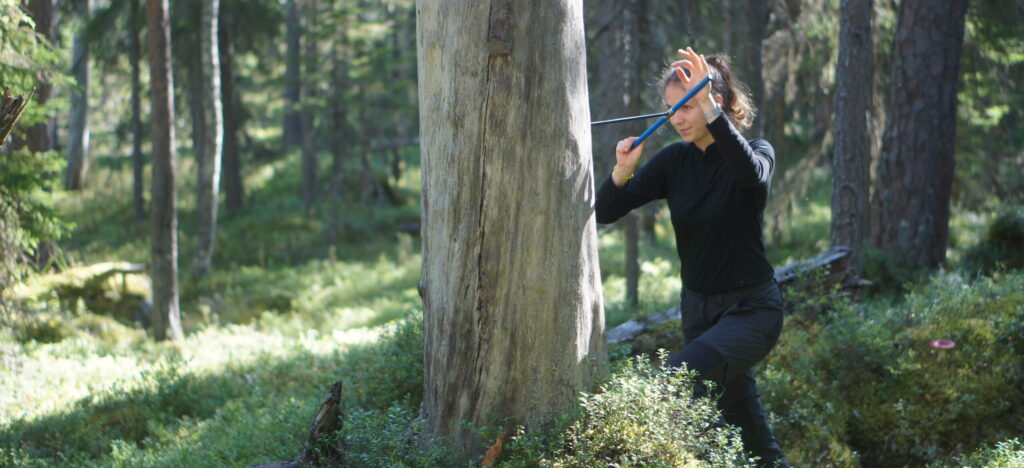
Kelo trees are barkless, silver-colored standing dead Scots pine trees that may remain standing for centuries. These structures are iconic to the European boreal forests, and play an important role for a number of specialized and threatened species. Together with researchers from different fields and artists we dive into the dynamics of kelo trees and their significance.
More information on project’s own website: https://www.kelokko.fi/?lang=en
Among group members, Pemelyn Santos, Mariina Günther, Aleksi Nirhamo, and Tuomas Aakala are involved.
Funded by the Kone Foundation
Conference presentations:
- Günther, M. 2025. Exploring the diverse chemistry of Scots pine deadwood via hyperspectral imaging. Presentation at Oikos-Finland 2025 Conference, March 12, 2025, Jyväskylä, Finland.
- Günther, M. 2024. Formation of long-lasting wood material: Understanding the chemical composition of kelo wood. Presentation and poster at Karelia Symposium 2024, April 9, 2024, Kuopio, Finland
- Günther, M. 2023. Ecology meets wood material science: Drivers of kelo wood formation in forest ecosystems. Poster at Oikos-Finland 2023 Conference, February 14, 2023, Helsinki, Finland.
- Günther, M. 2022. Ecology meets wood material science: Drivers of kelo wood formation in forest ecosystems. Presentation and poster at International Research Network for Cold Forests Conference 2022, October 6, 2022, Joensuu, Finland.
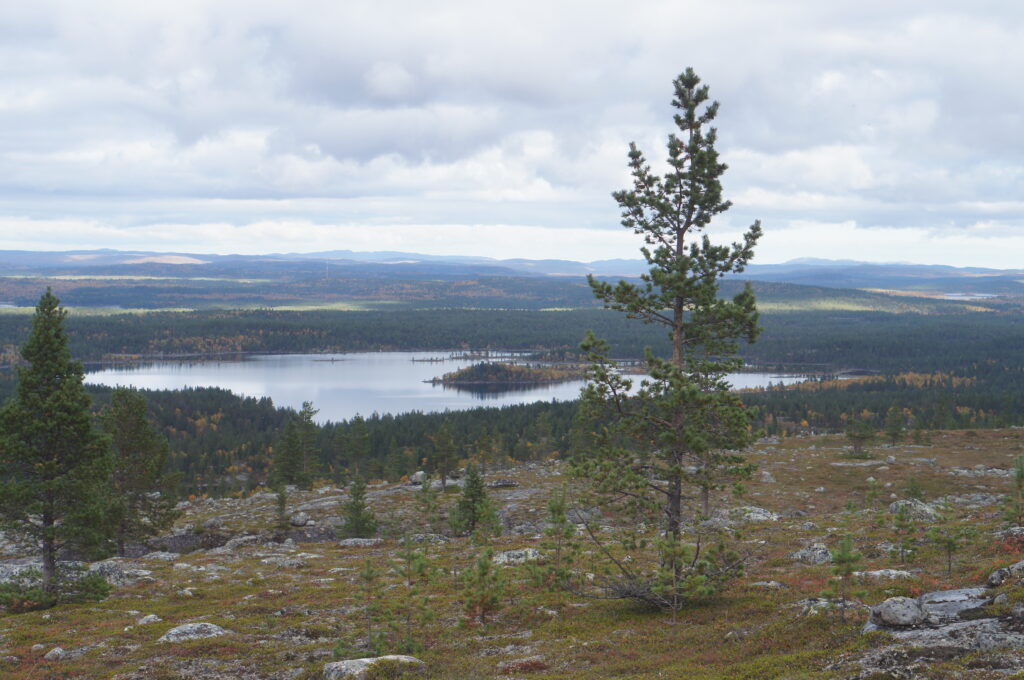
Treeline ecotones are among the most vulnerable ecosystems to climate change. In the Fennoscandian treelines, shifts may occur to among the open tundra, the birch forest and the boreal coniferous forest. In this project, we aim to identify the conditions in which biome shifts occur and to which direction. The focus is on climatic factors, natural disturbances (insect outbreaks) and traditional land-uses (reindeer herding). The project consortium is led by Sari Stark from the Arctic Centre at the University of Lapland, in collaboration with University of Eastern Finland.
Among the group members, Johanna Toivonen and Tuomas Aakala are involved.
The project is funded by the Research Council of Finland.
Conference presentations:
- Toivonen, J.M. 2025. Scots pine (Pinus sylvestris) and mountain birch (Betula pubescens subsp. czerepanovii) seedlings on the treeline ecotone of subarctic Finnish Lapland. Oikos Finland conference, March 11-14, 2025, Jyväskylä, Finland.

In the European boreal forests, fires are the most important natural disturbance, influencing vegetation and it’s development over long time scales. Wildfire occurrence is heavily influenced by climate, but this occurrence is also modulated by vegetation.
We study both how fire is influencing vegetation, but also how vegetation is influencing fire occurrence. We use historical (tree ring based) reconstructions, forest fire statistics, as well as experimental sites.
From the group, Gargi Tariyal, Aleksi Knaappila, and Tuomas Aakala participate.
Peer-reviewed publications:
- Tariyal, G., Flury, R., Kouki, J., & Aakala, T. (2025). Local and regional factors influencing historical forest fires in eastern Fennoscandia. Philosophical Transactions B, 380(1924), 20230452. https://doi.org/10.1098/rstb.2023.0452
- Knaappila, A. 2025. Forest fires in Finland 2014–2023 – Factors affecting ignition and size of the fires. [In Finnish with English summary]. M. Sc. thesis, available at https://erepo.uef.fi/handle/123456789/34196
The project is funded by the University of Eastern Finland, and by the Niemi Foundation
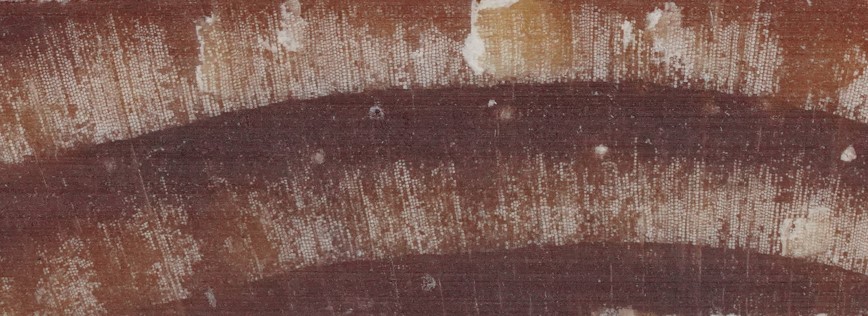 Tree ring dating of historical and archaeological objects, and their provenancing relies on a good coverage of networks of tree ring chronologies that are typically accrued through years of work of individual researchers. Pentti Zetterberg conducted tree ring dating work at the University of Eastern Finland from the late-1980s until 2023, dating numerous buildings and objects, as well as a large collection of subfossil material for studies of the climate history.
In this project, we are compiling and harmonizing the tree ring data collections accrued throughout Zetterberg’s career and making them publicly available. The release of these datasets will substantially enhance the tree ring network over Finland, improving the potential for dating and dendroprovenancing in Finland and beyond.
The project is funded by the Weisell Foundation
Conference presentations
- Aakala, T. 2025. Zetterberg tree ring data collection. Poster presentation at From Forests to Heritage Conference, May 28-31, 2024, Helsinki, Finland.
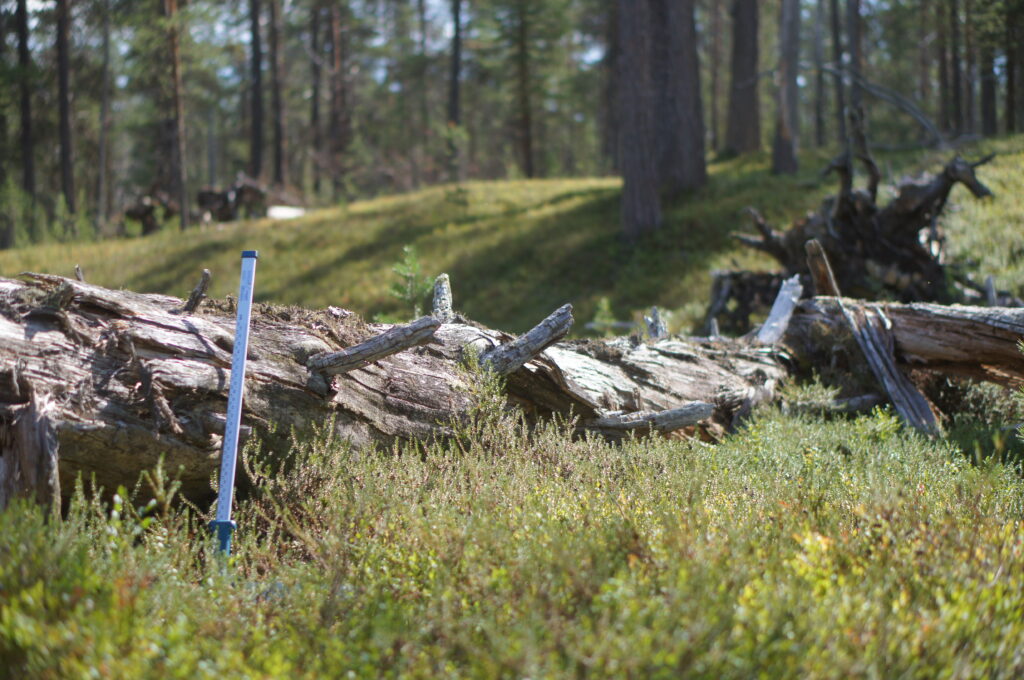
We maintain a series of permanent plots in naturally-developing old-growth forests, in several protected areas in Finland. These include two ca. 9 hectare fully mapped plots, and a series 48 small forest plots with known tree ages and fire history. The purpose of these plots is to monitor changes in natural forests, but they also serve as “infrastructure” for projects associated with biodiversity, or for testing and developing remote sensing methods or analytical tools. These plots are also included in the European Forest Reserves Initiative EuFoRIa (https://www.wsl.ch/de/projekte/euforia/).
Work with these plots has been funded by the Academy of Finland, Kone Foundation,the Finnish Cultural Foundation, and the University of Helsinki Funds.
Research from the plots in this network:
- Käber, Y., Bigler, C., Ris Lambers, H.J., Hobi, M., Nagel, T., Aakala, T., … Bugmann, H. 2023. Sheltered or suppressed? Tree regeneration in unmanaged European forests. Journal of Ecology 111:2281-2295.
- Pouta, P., Kulha, N., Kuuluvainen, T., Aakala, T. Partitioning of space among trees in an old-growth spruce forest in subarctic Fennoscandia. Frontiers in Forests and Global Change 5: 817248. DOI: 10.3389/ffgc.2022.817248.
- Kulha, N., Pasanen, L., Holmström, L., De Grandpré, L., Gauthier, S., Kuuluvainen, T. and Aakala, T., 2020. The structure of boreal old-growth forests changes at multiple spatial scales over decades. Landscape Ecology 35: 848-858. DOI: 10.1007/s10980-020-00979-w
- Aakala, T., Berninger, F., Starr, M. (2018). The roles of competition and climate in tree growth variation in northern boreal old-growth forests. Journal of Vegetation Science 29: 1040-1051. DOI: 10.1111/jvs.12687
- Kulha, N., Pasanen, L., Aakala, T. (2018). How to calibrate historical aerial photographs: A change analysis of naturally dynamic boreal forest landscapes. Forests 9: 631. DOI: 10.3390/f9100631
- Kulha, N., Pasanen, L., Holmström, L., De Grandpré, L., Kuuluvainen, T., Aakala, T. (2018). At what scales and why does forest structure vary in naturally dynamic boreal forests? An analysis of forest landscapes on two continents. Ecosystems. DOI: 10.1007/s10021-018-0297-2
- Aakala, T. (2018). Forest fire histories and tree age structures in Värriö and Maltio Strict Nature Reserves, northern Finland. Boreal Environment Research 23: 209-219.
- Aakala, T., Shimatani, K., Abe, T., Kubota, Y., & Kuuluvainen, T (2016). Crown asymmetry in high latitude forests: disentangling the directional effects of tree competition and solar radiation. Oikos, 125, 1035-1043. doi: 10.1111/oik.02858
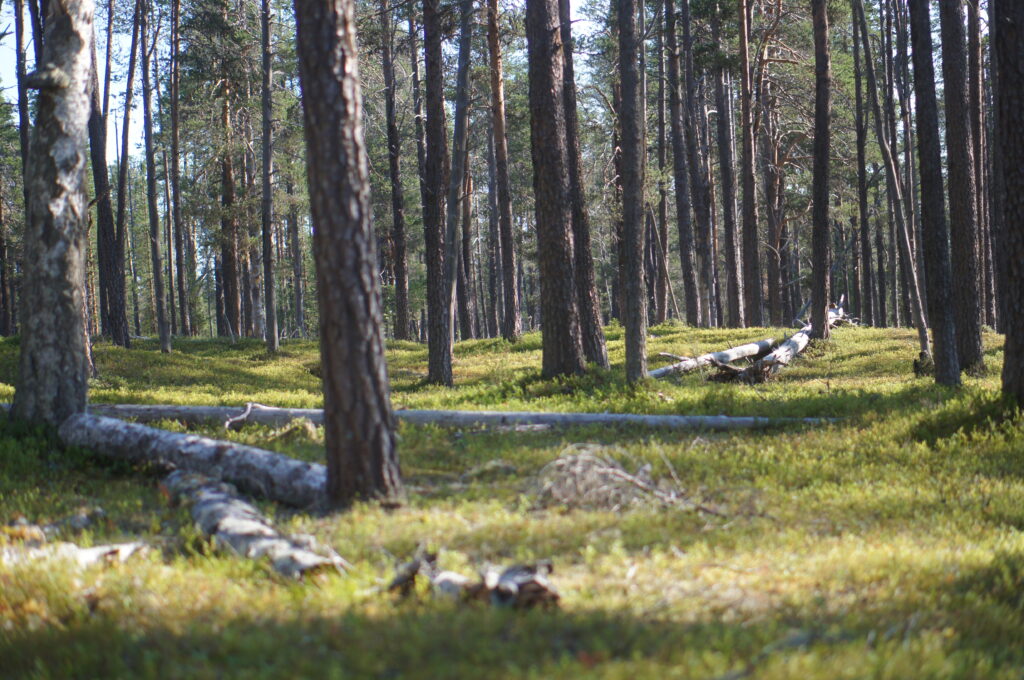
In this project, we have compiled dead wood measurements from the Finnish, Norwegian and Swedish National Forest Inventories, and developed harmonizations for analyzing these data in the same framework. Using this vast data set, we then developed models for predicting the probability that any standing dead tree in the Fennoscandian forest falls within the next 5-years.
The work is funded by the Kone Foundation.
Publications from this work:
Aakala, T., Storaunet, K.O., Jonsson, B.G., Korhonen, K.T. 2024. Drivers of snag fall rates in Fennoscandian boreal forests. Journal of Applied Ecology 61:2392-2402.
Aakala, T., Heikkinen, J., 2024. Harmonized decay classification for dead wood in Nordic national forest inventories. Scandinavian Journal of Forest Research 39:1-7.
Led by NIBIO Norway, and in collaboration with SLU Sweden, and Luke Finland, we are researching the use of old National Forest Inventory data, to advance the understanding on how dead wood quantities have developed over the long-term. For the Finnish data, this pertains to the sample plot measurements from the 2nd National Forest Inventory in 1936-38.
Funded by the SNS
