
Plenary speakers
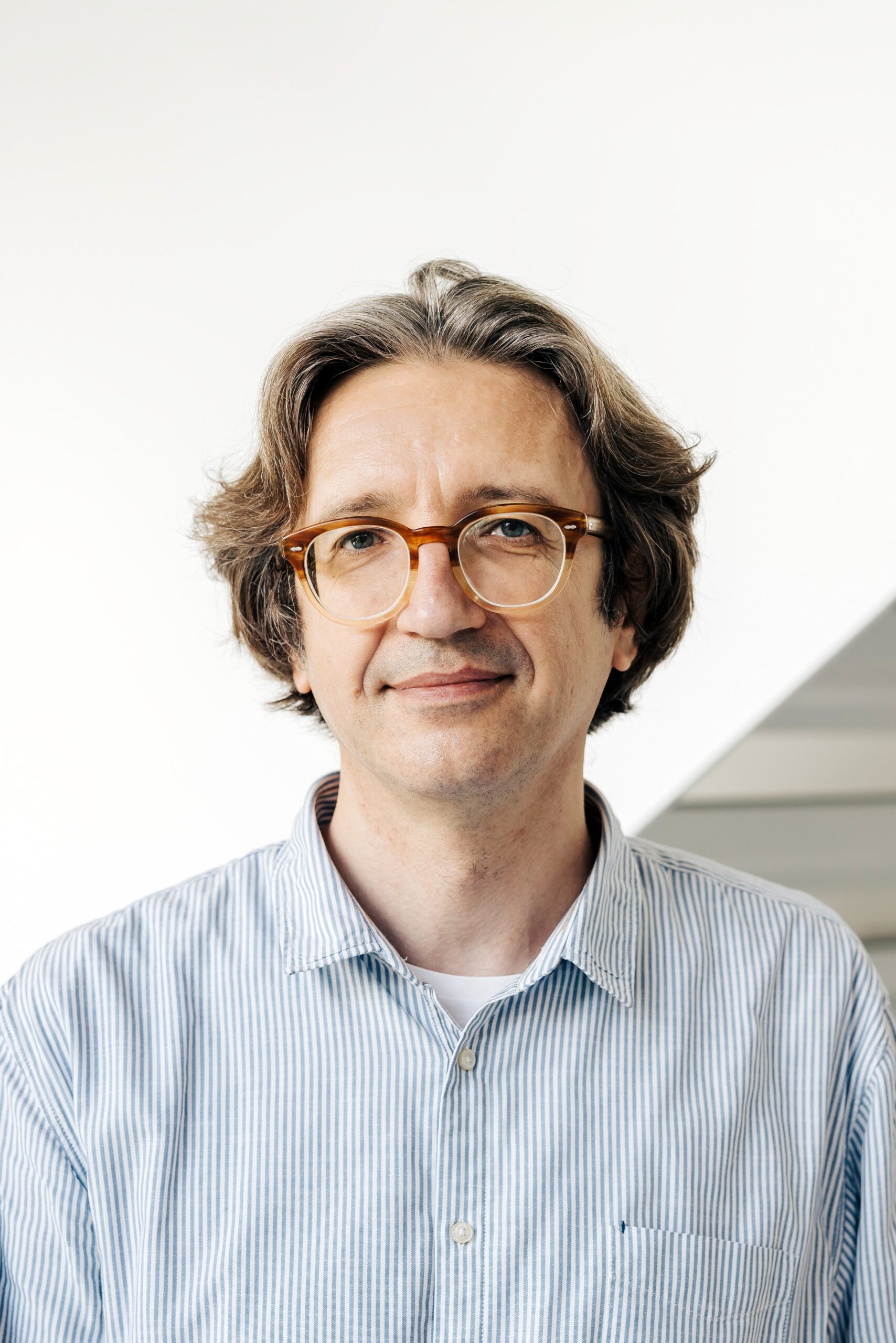
Fedor Jelezko
Professor
Institute for Quantum Optics, University of Ulm, Germany
Title
Solid-state qubits: diamond color centers and molecular spins
Abstract
Coherent control of single spins in solids has many applications in quantum information processing, communication and sensing. In this talk, we will discuss how single-spin diamond qubits can be used to create nanoscale quantum registers based on individual colour centres. We will demonstrate nanoscale quantum sensing using diamond nanoparticles containing colour centres, and present temperature and magnetic field measurements in living cells at the nanoscale. We will also discuss recent advances in the coherent control and readout of molecular spin qubits and demonstrate the coherent control of single spins associated with carbene molecules.
About
Fedor Jelezko is currently a director of the Institute of Quantum Optics at Ulm University, director of the Centre for Integrated Quantum Science and Technology and member of Heidelberg Academy of Sciences.
He studied in Minsk (Belarus) and received his Ph.D. in 1998. After finishing the habilitation in 2010 at Stuttgart University he was appointed as a professor of experimental physics in Ulm in 2011. His research interests are at the intersection of fundamental quantum science and quantum technologies. His research team is exploring applications of spin qubits in diamond for information processing, communication, sensing, and imaging
Outside academia, he is involved in the development of quantum technologies based on spin qubits. Prof. Jelezko and his colleagues are now pursuing its exploitation by means of their start-up company NVision Imaging Technologies GmbH and Diatope GmbH.
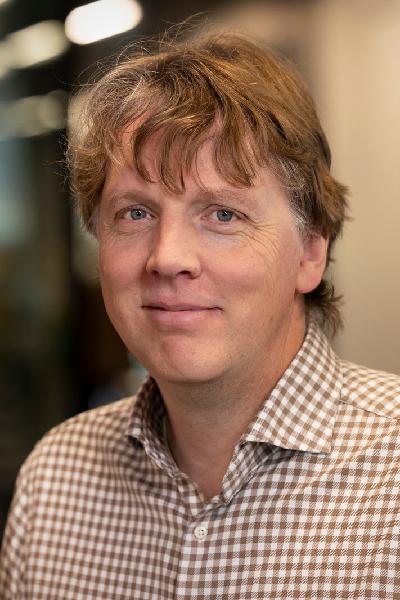
Håkan Rensmo
Professor
Uppsala University, Sweden
About
The group of professor Rensmo develop and implement the new possibilities with X-ray science with the aim to develop a fundamental understanding of key processes connected energy materials including light to electrical energy conversion and storage with applications such as photovoltaics and batteries.
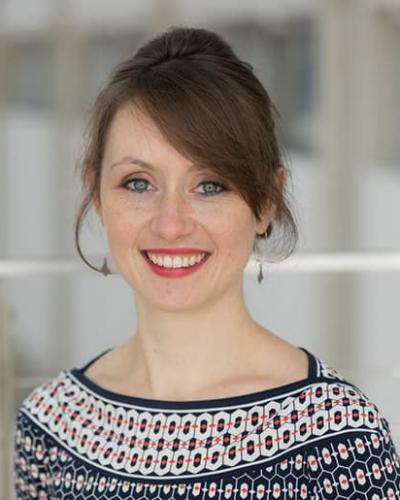
Natasha Holmes
Associate Professor
Cornell University, United States of America
Title
What does it mean for physics labs to be authentic?
Abstract
Educational innovation is pushing towards providing students with authentic learning experiences. But what counts as authentic? In this talk, I’ll discuss the various ways we’ve been conceptualizing authenticity in introductory physics labs, from simulating authentic practice to embedding the lab exercises in more advanced physics topics, such as particle physics and active matter. We’ll discuss preliminary data about student learning and perceptions and explore future research questions.
About
Natasha G. Holmes is the Ann S. Bowers Associate Professor at Cornell University. She earned her Ph.D. in physics at the University of British Columbia and completed postdoctoral work at Stanford University. She is a leader in physics education research, where her work focuses on transforming undergraduate laboratory courses to better support scientific reasoning, experimentation, and model‑based thinking. Drawing on both disciplinary training and education research, Dr. Holmes studies how students learn through lab work and how course design and assessment can improve learning outcomes and student experiences, with equity and inclusion treated as foundational elements of effective learning environments.
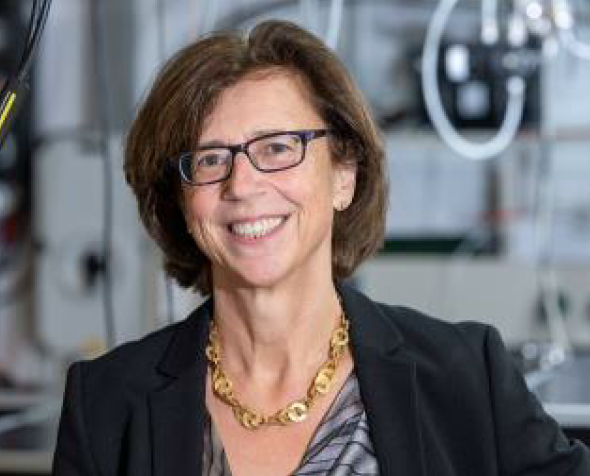
Ursula Keller
Professor
Swiss Federal Institute of Technology Zurich, Switzerland
About
Ursula Keller is a pioneer in ultrafast laser science and technology. She was a professor in physics at ETH Zurich from 1993 to 2025 and directed directed the Swiss national research program NCCR MUST (Molecular Ultrafast Science and Technology) from 2010 to 2022. She received her Diplom in physics from ETH Zurich in 1984 and her Ph.D. from Stanford University in 1989. She began her independent research career as a Member of Technical
Staff at Bell Labs (1989–1993).
She was a co-founder and board member for Time-Bandwidth Products 1995-2014 (acquired by JDSU in 2014) and for GigaTera from 2000 to 2003, a venture capital funded telecom company during the “telecom bubble phase” which was acquired by Time-Bandwidth in 2003. More recently she has been a co-founder of K2 Photonics in 2023. She also served on the supervisory board of Jenoptik from 2022-2026.
Keller made groundbreaking contributions to ultrafast solid-state and semiconductor lasers, including the development of semiconductor saturable absorber mirrors (SESAMs), ultrashort pulse generation in the single-cycle regime, frequency comb stabilization, the attoclock technique and attosecond transient absorption spectroscopy for probing quantum
dynamics.
Her work has been recognized with numerous international awards, including the Swiss Science Prize Marcel Benoist (2022), IEEE Edison Medal (2019), OSA Frederic Ives Medal and SPIE Gold Medal (both 2020), European Inventor Award for lifetime achievement (2018), international member of the U.S. National Academy of Engineering (NAE 2026), the U.S. National Academy of Sciences (NAS 2021) and the Royal Society in London (FRS 2025)
and two ERC Advanced Grants (2012 and 2018). She supervised 101 Ph.D. students, published over 540 peer-reviewed papers, and holds an h-index of 126 with more than 61,000 citations (Google scholar). In 2022, she published the graduate textbook Ultrafast Lasers (Springer Verlag).
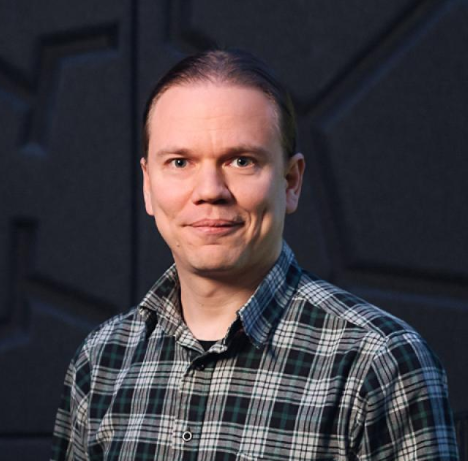
Simo Saarakkala
Professor
University of Oulu
About
Simo Saarakkala currently acts as Professor of Biomedical Engineering and Head of the Research Unit of Health Sciences and Technology, Faculty of Medicine, University of Oulu, Finland. He is also a Scientific Director of Infotech Oulu Focus Institute, University of Oulu, Finland. Prof. Saarakkala has published over 280 peer-reviewed scientific articles on different aspects of musculoskeletal imaging and biomechanics, particularly focusing on osteoarthritis. He is an internationally recognized researcher in the field of osteoarthritis imaging. Prof. Saarakkala’s research group is primarily focusing on diagnostics and imaging of osteoarthritis and rheumatoid arthritis. Recently, his research interests have also extended to development of bio- and molecular sensing methods for various diseases.