
From Everyday Choices to Mathematical Models: Creating Integrated Teaching Material for Home Economics and Mathematics
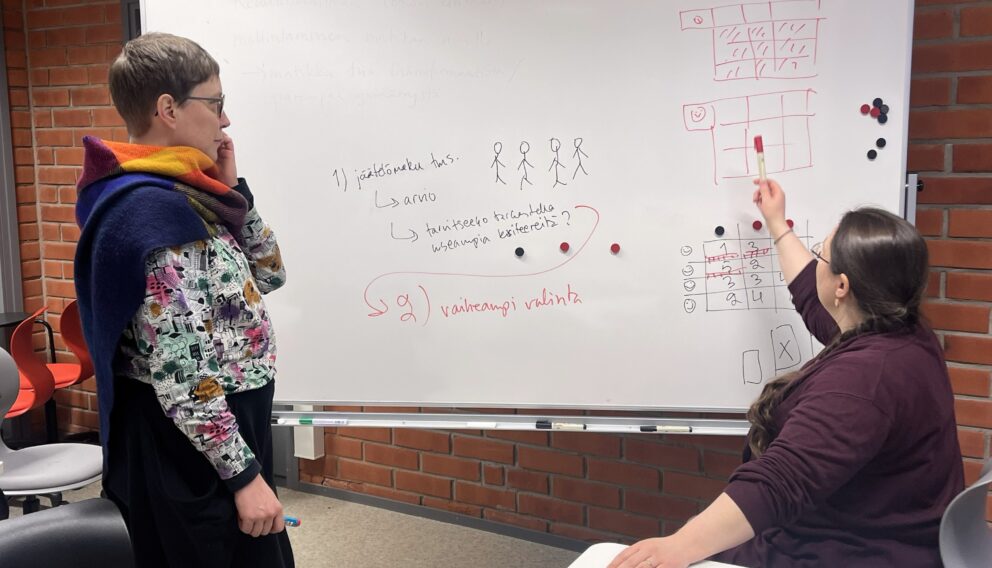
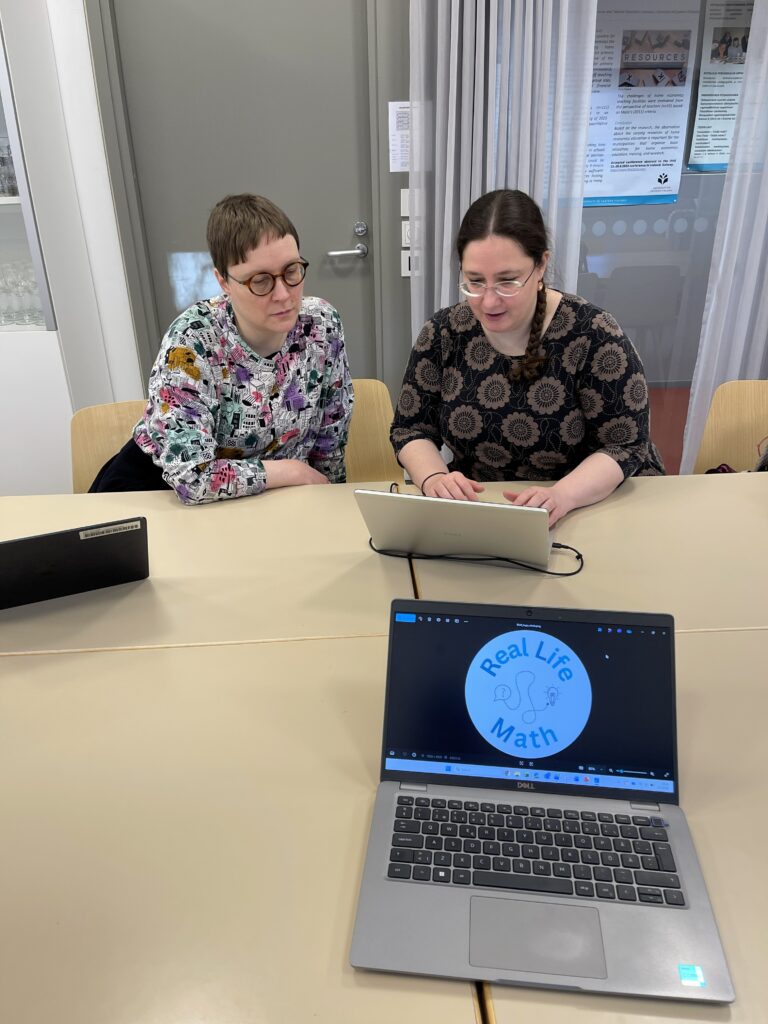
Saara Lehto from the University of Vaasa and LUMA Centre Ostrobothnia and Johanna Rämö and Mari Ponkilainen from the University of Eastern Finland spent two intensive days together in Joensuu working on innovating new teaching materials that integrate home economics and mathematics.
Starting the journey towards our goal, we first brainstormed a lot of ideas for possible themes for our teaching materials. We considered combining knot theory with braiding different kinds of bread doughs or studying different ways of folding pastries like origami. One idea, though, felt more challenging and more relevant than the rest: combining sustainability, real life decision making and the mathematical viewpoints that could help us tackle these problems.
Our aim is to create teaching materials that highlight the multidimensional nature of everyday decision-making situations and the importance of different criteria in those choices. We aim to illustrate how the weight of various criteria can differ from one situation to another, for example when choosing the best laundry detergent, a new mobile phone, or how to spend our holiday.
We also want to show how everyday considerations can be translated into numbers and how mathematics and a mathematical way of thinking can provide additional information and a deeper understanding of the situation and perhaps reveal hidden unconscious biases. In addition, we examine product comparisons and the types of mathematical models used in them.
The planning days in Joensuu were filled with extensive brainstorming and long discussions. At times, we tested the mathematical model itself – through trial and error we discovered all the factors that need to be considered.
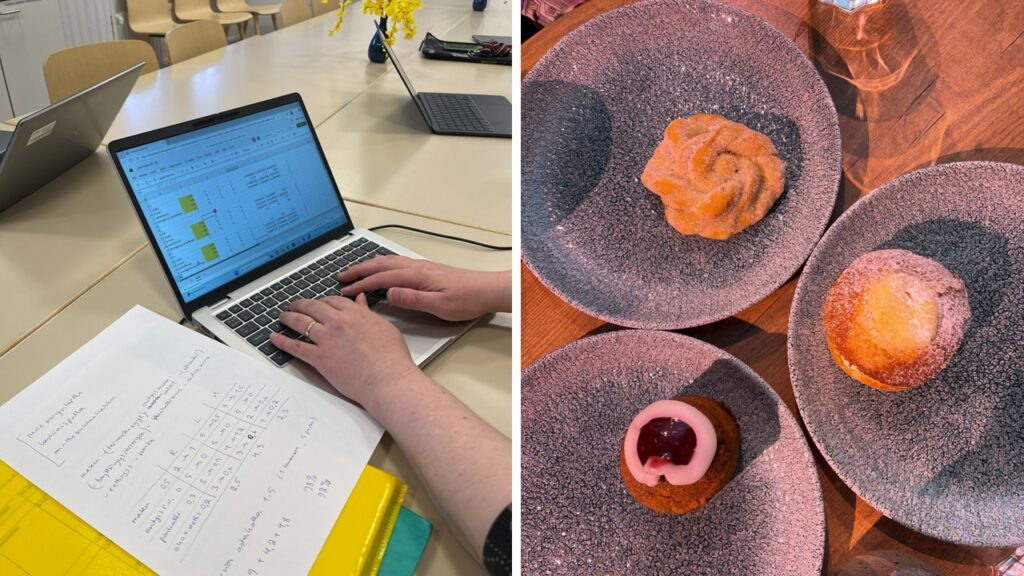
In operations research, decision matrices are used in making decisions in situations where several different criteria need to be consulted. In work studies and in home economics research and education, value analysis can be used to compare different options and their features – for example when evaluating work methods or choosing surface materials or household appliances. To understand the method and to get a better feel for what benefits and challenges might arise in teaching situations, we constructed our own decision matrix to choose the coffee bread for our afternoon coffee break. This playful exercise revealed several key points, potential challenges, and interesting discussion options that all turned out useful in planning our teaching materials. We produced at least four different structural options for the teaching material until we were satisfied with the final one.
Along the way, we revisited the goals we had set at the beginning and reflected on whether our ideas aligned with them. We realised that effective subject integration requires keeping the characteristics and needs of both disciplines clearly visible: From a home economics perspective, does the material bring out the multidimensional nature of everyday decision-making situations? Does it support the ability to assess options and make informed choices and act sustainably in everyday life? Does the material offer a fresh and inspiring perspective for mathematics? Is mathematics more than just a mechanical tool? We also made a point of considering the teachers who would ultimately use the material. It needed to be meaningful, practical, and straightforward enough to adopt so that it would genuinely find its place in everyday classroom work.
As we wrapped up our working days, we felt that everyday decision making offers promising directions for our teaching material — and the work continues from here.
This is real-life mathematics in action.
Writers
Saara Lehto
Specialist in Science Education
University of Vaasa
LUMA centre Ostrobothnia
Dr. Johanna Rämö
University lecturer of mathematics
University of Eastern Finland
Department of Physics and Mathematics, Faculty of Science, Forestry and Technology
Mari Ponkilainen
University teacher of home economics
University of Eastern Finland
School of Applied Educational Science and Teacher Education