
Stitching Mathematical Dispositions: Everyday Mathematics in Creative Practice – Sewing Shopping Bags for Our Visitors
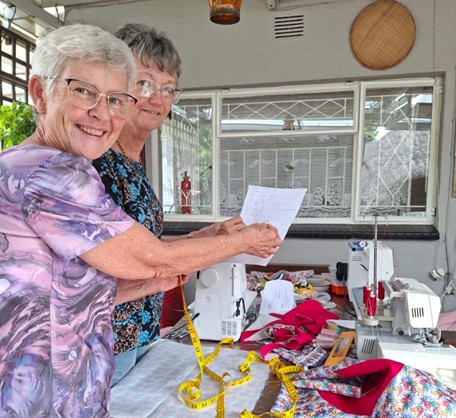
This post forms part of the RealLifeMath project, where the aim is to make everyday mathematics visible—especially in contexts where it often goes unnoticed.
Reusable shopping bags may seem simple. But stitched into every seam was reasoning, precision, judgement, and care. Through this activity, we were not only applying mathematical skills; we were cultivating mathematical dispositions—precision, perseverance, critical thinking, intellectual discipline, and responsible decision-making.
We were learning to question, to justify, to estimate wisely, to revise when necessary, and to trust logical reasoning.
In this way, the sewing room became more than a creative space. It became a space where habits of mind were stitched alongside fabric. Real-life mathematics does more than teach procedures—it shapes dispositions.
Where the Mathematics Began: Unit Conversion
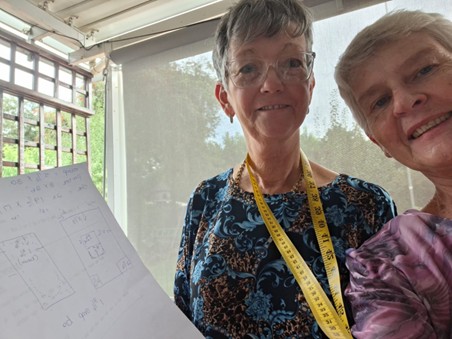
Recently, my friend Annemarie and I decided to make reusable shopping bags for our Finnish visitors. What started as a practical, creative gesture quickly became a rich mathematical experience. The original pattern measurements were given in inches, but we worked in centimetres.
That meant mathematics was not optional. It was essential. And in that moment, mathematics moved from the page into our hands.
The pattern instructions read:
- 18 inches wide
- 16 inches high
- 4-inch boxed corners
- 22-inch handles
Although our measuring tapes display both inches and centimetres, we naturally chose to work in centimetres, as this is the unit of measurement we are most accustomed to using.
Why this makes cognitive sense
From a cognitive perspective, it is easier and more efficient to work within a familiar measurement system. Centimetres are part of the metric system, which is base-10. Because our number system is also base-10, calculations such as multiplying, dividing, adding seam allowances, or converting to metres require less mental effort.
In contrast, inches belong to the imperial system, which is not structured around tens. Conversions (for example, 12 inches in a foot, or working with fractions like ⅝ or ¾ inch) demand additional cognitive processing. This increases cognitive load and makes mental calculations slower and more prone to error.
Working in centimetres therefore reduces unnecessary mental strain and allows for clearer thinking. And when thinking becomes clear, creativity becomes confident.
Here, we were cultivating cognitive efficiency and strategic decision-making—choosing the system that best supported accurate reasoning.
So, the first task was converting inches to centimetres.
1 inch = 2.54 cm
We calculated:
- 18 × 2.54 = 45.72 cm
- 16 × 2.54 = 40.64 cm
- 4 × 2.54 = 10.16 cm
- 22 × 2.54 = 55.88 cm
Immediately, deeper questions emerged:
- Do we round to 46 cm or keep 45.7 cm?
- How precise do we need to be for sewing?
- Will rounding of numbers affect symmetry practically in the bags produced?
These were not textbook questions—they were design decisions with visible consequences. In these moments, we were cultivating judgement and mathematical integrity: understanding that small numerical decisions can have structural impact.
Measurement and Precision
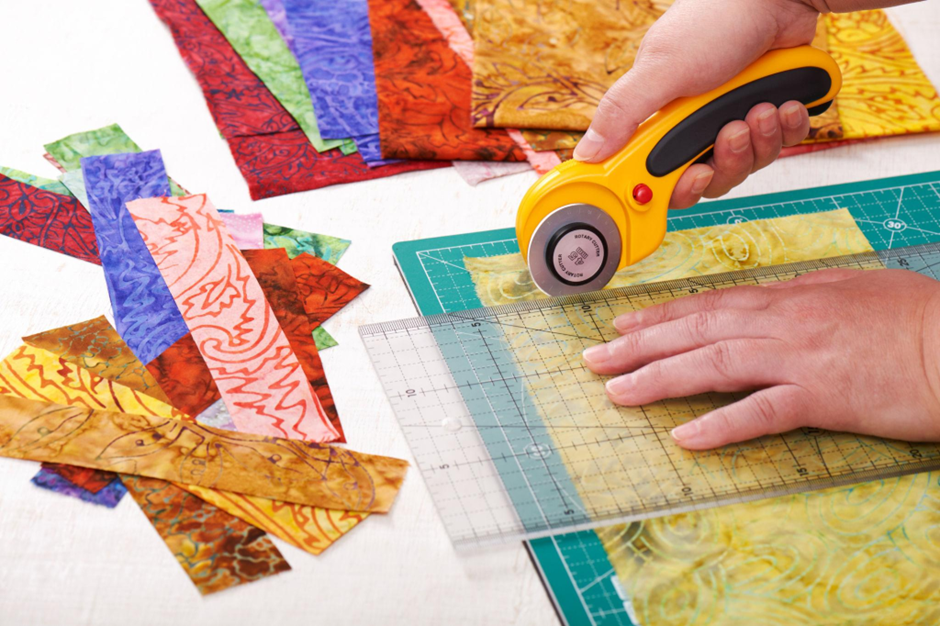
Fabric cutting requires accuracy. A few millimetres can distort the entire structure of a bag.
We had to:
- Mark straight lines using rulers
- Ensure right angles at corners
- Add seam allowances (1–1.5 cm)
- Keep both sides identical
Suddenly, geometry became tangible:
- Parallel lines
- Perpendicular angles
- Rectangles
- Symmetry
The “boxed corners” required measuring 10 cm squares at the bottom edges and stitching diagonally. This demanded spatial reasoning—transforming two-dimensional measurements into a three-dimensional structure.
Here, precision was no longer a rule imposed from outside. It became a habit of mind. Intellectual discipline was stitched into every seam. Every corner shaped by reasoning. Every line an exercise in careful thinking.
Estimation and Fabric Calculations
Next came fabric planning.
If each bag required:
- 46 cm height × 2 (front and back)
- 41 cm width
- Extra for seams and handles
How much total fabric would we need for 10 visitors?
We calculated area, added allowances, and determined the total length required when buying from the roll.
This involved:
- Multiplication
- Area calculations
- Estimation
- Budget-conscious planning
But estimation here was more than arithmetic. It required responsible thinking. We were not simply calculating numbers—we were managing resources wisely. Mathematics trained us in stewardship. It reminded us that precision and care extend beyond the product to the process itself.
Ratios, Scaling, and Systems Thinking
At one point, we considered slightly enlarging the bag for practicality. That meant scaling all measurements proportionally.
Increasing the width by 2 cm meant:
- Adjusting height
- Adjusting corner size
- Adjusting handle placement
We quickly realised that scaling is not simply adding “a bit more.” It affects the entire structure.
This was systems thinking in action. Proportional reasoning nurtured the disposition to see relationships—to understand that change in one element influences the whole.
Mathematics reminded us that everything is connected.
Time and Process Mathematics
Even time required calculation:
- 15 minutes cutting per bag
- 20 minutes stitching
- 10 minutes pressing and finishing
How long would 10 bags take? What if one seam had to be unpicked?
Here, mathematics strengthened strategic thinking and perseverance. Planning time meant anticipating challenges and building flexibility into the process.
We were not only sewing—we were thinking ahead, adjusting, refining.
Mathematical dispositions such as persistence, adaptability, and realistic planning were quietly being developed.
Why This Matters
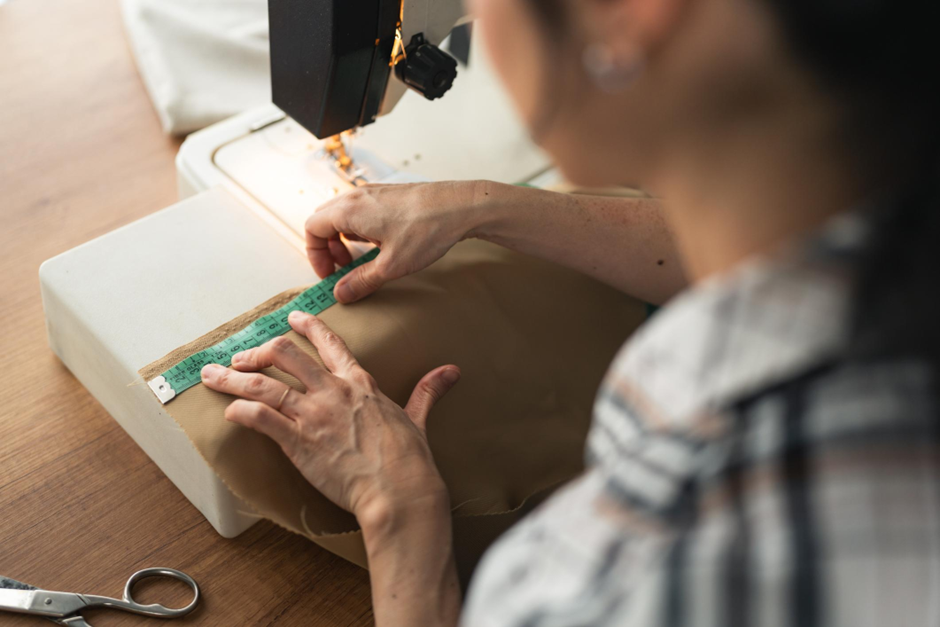
This simple act of making shopping bags demonstrated that:
- Mathematics lives in design and craft.
- Unit conversion is practical and purposeful.
- Precision builds intellectual discipline.
- Geometry supports structure.
- Estimation nurtures responsible stewardship.
- Scaling develops relational and systems thinking.
- Time planning strengthens strategic perseverance.
Most importantly, this experience reminded us that mathematics does not belong only in classrooms. It lives in kitchens, gardens, workshops—and sewing rooms.
When student teachers encounter mathematics in authentic creative practice, they begin to see more than content. They begin to recognise the dispositions being formed.
Confidence grows.
Judgement strengthens.
Reasoning deepens.
Making shopping bags for visitors became more than a creative gesture.
It became real-life mathematics in action.
It became the deliberate stitching of mathematical dispositions.
And perhaps that is the greatest lesson of all:
Mathematics is not something we do only at desks. It is something we live—one careful measurement, one thoughtful decision, one deliberate stitch at a time.
Writer
Magda Kloppers
Professor
North-West University
School of Mathematics, Science and Technology
South Africa