
Real-life situations are complex: math modeling reveals that
Three colleagues, here called as First, Second, and Third, sat in a café at Johannesburg Airport. They had participated in the SAAFECS / IFHE conference, the week filled with intensive yet inspiring encounters. While enjoying their coffee, they engaged in a light form of professional reflection; listing and reviewing the expenses that emerged during the week.
Utilizing heuristics, they reconstructed events retrospectively. Earlier that day, Second had paid for the taxi to the airport. However, part of that was covered by the South African rand that Third had left. The day before, they had shared a dinner that First paid. But they had not consumed equal portions, and, moreover, a beverage offered to the Fourth colleague had been included in the bill. A question raised, of who should assume responsibility for the offer, as they all very much enjoyed the company of Fourth. And as for the tip, it had been paid in coins and small bills, but no one could recall from whose wallet the money was from.
Earlier in the week, there had been a substantial grocery bill, which included individually preferred items purchased for collective use. Third, however, had partially opted out of these collective meals by eating dinners in the conference restaurant. Eventually, the three colleagues found a mutually acceptable solution, calculating the balances in both rands and euros. Smiling, they concluded: it had been such a wonderful trip, an absolute professional highlight.
The case narrates a typical real-life problem that we are all familiar with. We share expenses of gifts, foods, events, holidays, and holiday homes even. Indeed, for many teenagers, sharing gasoline costs is one of the first situations in which they must negotiate what is a fair share. Mathematical modeling would exemplify this as three people sharing 21€ expenses means 21€ divided by 3, equals to 7€. But only in textbooks are the cases that uniform. In real-life contexts, modeling should represent the variety of portion size, timing, social relations; situational factors that influence the (arithmetic) outcome. The more a situation is in real life context, the less sufficient basic arithmetic skills alone become.
This raises the question of how such a problem should be modelled prior to solving it. How can one represent mathematically a situation in which three individuals consume unequally the utensils in a shared bill and when the inequality is not necessarily measurable in numbers?
Within discussions of mathematical modeling, pragmatic goals (that is, modeling the content) are identified as a goal of pedagogic attempts, alongside formative goals (that is, the development of modelling competencies), and psychological goals (that is, those related to motivation). To achieve these goals, mathematical modeling tasks should be cognitively, epistemologically, and mathematically rich, as well as motivating and authentic (Blum, 2015; Krawitz et al., 2025).
The earlier “three-individuals-one-bill” case is authentic, yet in its simplest form it is not mathematically rich. It becomes more complex with real-life adjustments: the shared bill consisting of an expense of a beverage offered for Fourth. Fourth colleague being socially connected to all three but has a more personal relationship with Second. Indeed, how do numbers illustrate social amenity in relation to financial costs? In short, increasing authenticity increases complexity.
In home economics education, authenticity is inherently present, as the subject engages students in tangible and practical activities. More specifically, authenticity is closely associated with problem-based learning (for instance, Trevallion, 2020). Moreover, authentic learning environments have been shown to enhance students’ problem solving and critical thinking skills (Kuusisaari et al., 2021).
Even though home economics education supports the development of problem-solving skills, research in the field has provided limited insight into the specific skills involved. One interpretation is that problem-solving skills in home economics classes require an integration of cognitive and practical skills. However, mathematical modeling of these real-life situations helps illustrate their complexity. As in the example of three colleagues, arithmetic skills alone are insufficient, individuals must also reason, make sense, and anticipate the outcome of actions. Moreover, real-life problem-solving often takes place in social contexts that require negotiation, responsibility, collaboration and ethical thinking. Especially when money is involved.
Returning to the coffee break at Johannesburg Airport, three colleagues sat back, satisfied after resolving such a multifaceted task. Then Third suddenly recalled: ‘Did we forget the adapter that you [First] paid in the very beginning, the one that I partially lost? Can it be reimbursed if it is not intact yet functioning..’
In unison, they decided to close the discussion, repeating: ‘Such an educative experience, that trip. Hippos and all.’
References
Blum, W. (2015). Quality teaching of mathematical modelling: What do we know, what can we do? In J.S. Cho (Ed.), Proceedings of the 12th international congress on mathematical education (pp. 73–96). Springer.
Krawitz, J., Schukajlow, S., Yang, X., & Geiger, V. (2025). A systematic review of international perspectives on mathematical modelling: Modelling goals and task characteristics. ZDM–Mathematics Education, 57(2), 193-212.
Kuusisaari, H., Seitamaa-Hakkarainen, P., Autio, M., & Holtta, M. (2021). The future of home economics teaching: Teachers’ reflections on 21st century competencies. International Journal of Home Economics, 14(2), 51-68.
Trevallion, D. (2020). Clarifying food technology teachers’ professional identity. International Journal of Home Economics, 13(2), 80-89.
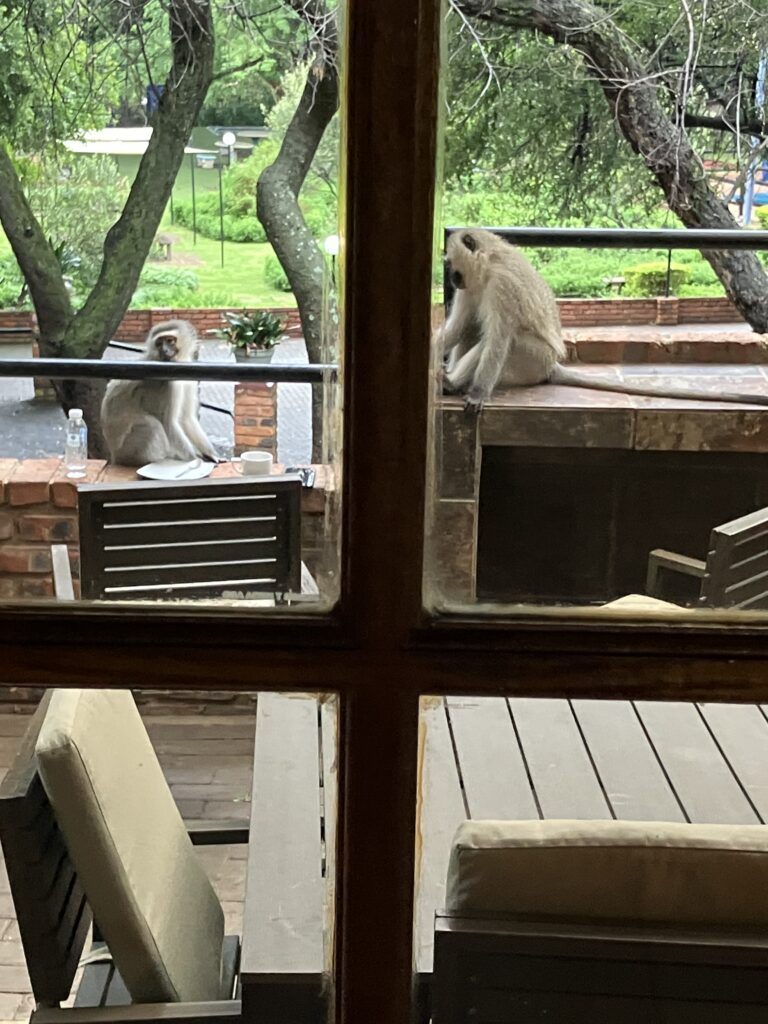
(The coffee consumers shown in the picture are not related to the case)
Writer
Marilla Kortesalmi
University Lecturer
University of Eastern Finland
Philosophical Faculty
School of Applied Educational Science and Teacher Education