
Katja Laakkonen: Middle-age as an asset
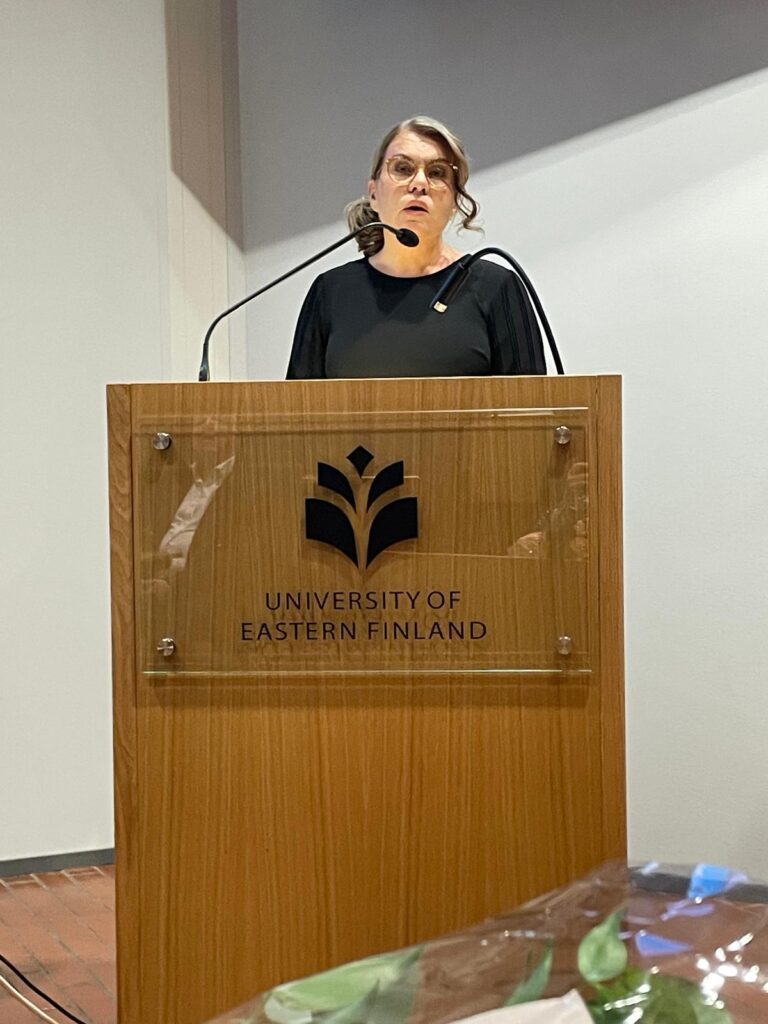
I qualified as a nurse in 2000 and worked in the profession for twenty years. Almost one third of my career I worked in Norway—initially living there and later commuting from Finland. I had never anticipated entering academia, yet it was precisely these years in Norway that prompted me to reflect on commuting as a social phenomenon. My curiosity grew to the extent that I submitted a research proposal to the university, and before long, I found myself in a new role as a doctoral researcher.
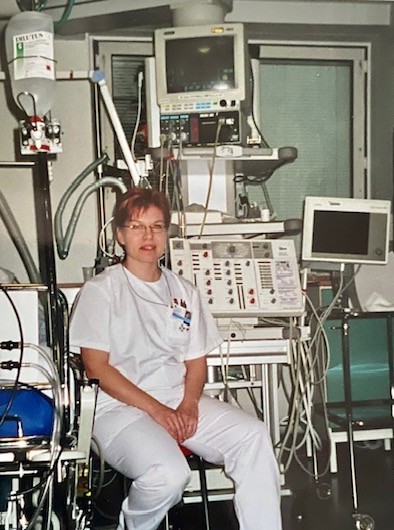
The transition from professional practice to an academic environment was both exhilarating and, at times, daunting—a leap into the unknown. I soon discovered that I needed to acquire an entirely new language: the language of academia. Much like an ethnographer who needs to learn the language of their field in order to understand its everyday practices, I began to familiarise myself with the concepts, nuances, and tacit conventions that shape academic life.
At first, many of the terms used around me were unfamiliar, so I often looked them up later or sought explanations through other means.
Gradually, however, the language began to make sense, and I came to recognise that my working-class background and professional experience was not a disadvantage in academia. On the contrary, it was increasingly regarded as an asset.
Having now completed my doctoral dissertation in social and public policy, I am grateful to be fluent in two languages: the language of academia and the language of working life. Although distinct, these languages form bridges that enable me to navigate between two different everyday worlds. As a researcher, I am able to draw on my professional background as a nurse and my experiences from clinical practice. In my home environment, I have learned to speak about science in ways that are accessible and meaningful to those outside academia.
What has made this possible? I believe the answer is straightforward: confidence gained through age and experience.
Middle-age, I have found, offers distance, perspective, and the courage to cross boundaries—sometimes boundaries one had not even been aware of.
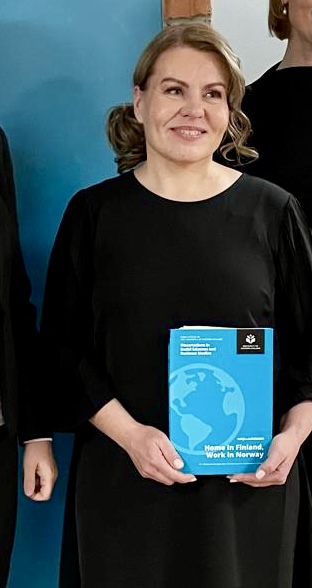
This idea also guides my work in the Menopausing project. As in my dissertation, I draw on my own background—both professional and lived experience—as a methodological resource without reducing the research to personal narrative. I continue to employ the concept of researcher-positioned knowledge, an approach in which the researcher’s experiential, embodied, and professional knowledge are integrated as analytical tools. This methodological stance shapes the entire research process, from data collection and interpretation to the act of writing itself.
A researcher’s previous work experience outside academia is not peripheral to research but central to it. Such experience opens new perspectives and grounds academic inquiry firmly in lived reality. In this context, middle-aged women are not silent bystanders but active trailblazers whose accumulated knowledge and experience enrich both research and practice.