
Melika Azim Zadegan: Teaching Brain Health to Young Minds
In June 2024, as part of our PhD journey in the Neuro-Innovation programme, we doctoral researchers had the unique opportunity to deliver lectures on various brain health topics to a group of bright 10- to 12-year-olds. This experience was part of SnellmanEDU’s Children’s University. This year’s theme, “Brain Health: Exploring the Mind,” was organized and led by Neuro-Innovation doctoral researchers with the goal of engaging young minds in understanding different aspects of brain health.
The two-day camp, held at the University of Eastern Finland’s Snellmania building in the heart of Kuopio, was the result of months of planning and preparation to create high-quality, enjoyable activities for children. Our aim was to deliver workshops and lectures that combined brain health education with interactive, engaging experiences tailored for a young audience. This role challenged us as researchers to go beyond scientific knowledge, encouraging us to use creativity to make complex concepts simple and accessible for children.
Our interactive camp covered a wide range of topics, from brain anatomy to cognitive processes, all designed to make complex ideas accessible and enjoyable for young minds. We began with an introduction to the brain’s structure, guiding the kids in identifying and naming its different parts.
To help them understand how the brain functions, we introduced concepts like working memory. Through hands-on activities, they learned when and how the brain uses this type of memory and which areas are responsible for processing it. We also explored brain imaging and treatment techniques, focusing on how light and sound are used in medical imaging.
The camp also featured a digital health workshop, where we introduced wearable technologies (eg, Smartwatches) and discussed how these devices can help manage various health symptoms or conditions, such as physical activity, by showcasing specific devices and explaining how they monitor various symptoms in neurological conditions.
One of the most exciting sessions for the children was our exploration of Generative Artificial Intelligence (Gen-AI). Given its popularity, we introduced the kids to creative prompt engineering, showing them how to use AI in fun and practical ways. To make this engaging, we led a co-creative storytelling activity where the kids interacted with the AI to collaboratively shape a story, helping them develop skills in iteration and creative problem-solving.
A highlight of the camp was our exploration of digital tools—apps and games—designed to promote cognitive development. We discussed how these tools can improve focus, memory, and emotional regulation. To make the session even more dynamic, we incorporated games aimed at enhancing concentration and reaction time, giving the kids a firsthand experience of how digital tools can benefit brain health. This practical approach connected them with the material on a deeper level, making learning both impactful and enjoyable.
This camp blended foundational scientific knowledge with fun, creativity, and tech-savvy skills, equipping young participants with tools to understand the wonders of the brain and how technology can help us monitor and support brain health.
Inspiring Young Minds: My Experience In Teaching Digital Health
As a researcher studying Innovation management with a PhD project focused on digital health, I volunteered to teach a session on how digital health can be used to improve brain health. My goal was to explain these concepts in a simple, engaging, and fun way that would resonate with the young group.
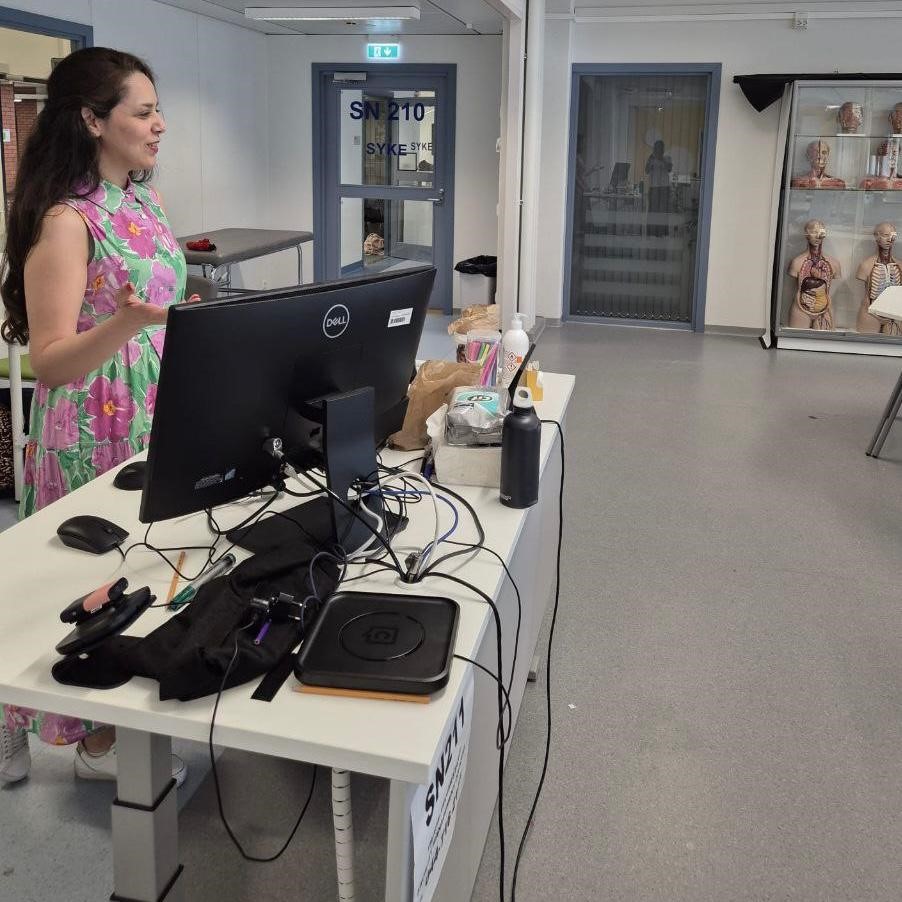
I started with basic concepts about digital health in a storytelling format, using examples to illustrate each point. I tried to engage the children by asking if they had any experiences with telehealth or mobile health solutions—and to my surprise, many of them were familiar with telehealth from everyday use (e.g., the Terveystalo app) as their real-life experiences, which they knew through their families.
From there, I introduced them to how mHealth can support overall well-being, how digital health wearable devices can be used for tracking symptoms, and their role in managing neurodegenerative diseases like Parkinson’s and Alzheimer’s. To keep them engaged, I used colourful, interactive slides and short videos, which added a layer of fun and made the content easier to grasp.
Delivering a lecture to such a young audience made me appreciate the value of clear communication and genuine engagement. Teaching children requires breaking down complex concepts into simpler, relatable terms, often using analogies or visual aids. However, teaching children is not a one-way street. In many ways, they taught us more than we anticipated—through their questions, comments, and fresh perspectives. Their curiosity inspired me to look at my research from new angles and reminded me that simplifying information doesn’t diminish its value; it enhances it.
Through this experience, I learned that young children are not only open to learning about health and well-being but are also remarkably intuitive in understanding the importance of a balanced approach to technology use in health contexts. This insight strengthened my belief in the need for early intervention and education in digital health.
Last Words…
It was not just a camp for the kids—it was a learning journey for us as researchers, too. We saw our work in a new light, through the eyes of curious young minds, which reminded us to always consider the broader impact of our research and the importance of delivering knowledge to different target groups and audiences across various age groups.
Last but not least, we would like to thank the Neuro-Innovation PhD programme and SnellmanEDU for making this experience possible for us.
Melika Azim Zadegan works as a doctoral researcher in the Neuro-Innovation PhD programme. Her research focuses on remote iNPH patient monitoring.