
Meheli Banerjee: Turning Nos into Next: surviving academic rejection one submission at a time
A PhD is often described as the start of an academic career. What people mention less often is that it’s also the start of doing a lot of things… alone.
During our bachelor’s and master’s degrees, academia feels like a group activity. We complain about worksheets and projects together, divide tasks, help each other out, and somehow always find someone who understands exactly how annoying that one assignment is. It all feels like preparation for something bigger.
And then you start a PhD.
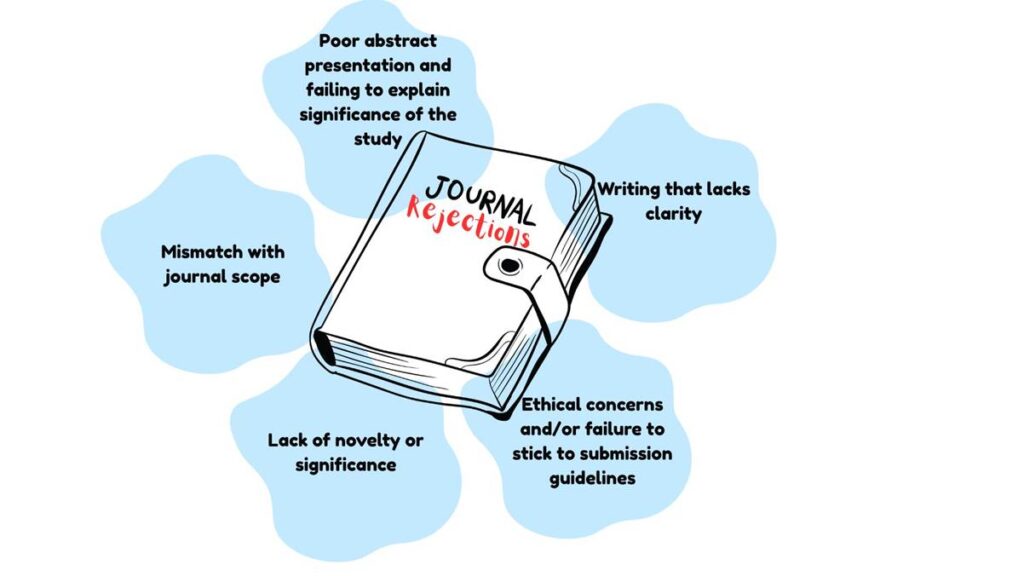
Suddenly, the training wheels come off. You still have peers and support, but a lot more is on you. Your ideas, your experiments, your mistakes, your responsibility. So I put on my brave-girl face and spent the first two and a half years buried in experiments, data, and analysis. Eventually, I had a story I wanted to tell. I opened my laptop and started writing my first manuscript. When I finally finished the draft, I genuinely thought, “Phew! the hard bit is done.” I formatted the paper according to the journal’s guidelines (which felt like a whole project on its own), hovered dramatically over the submit button for a moment, and clicked it. Immediate relief. I remember thinking I could finally move on to the next thing in my PhD. The relief quickly turned into my first desk rejection. It stung, but I shrugged it off. Re-formatted the paper for journal number two. Rejected again. Then came rejection number three—from a journal whose scope I was very confident matched my work. That one hurt. A lot.
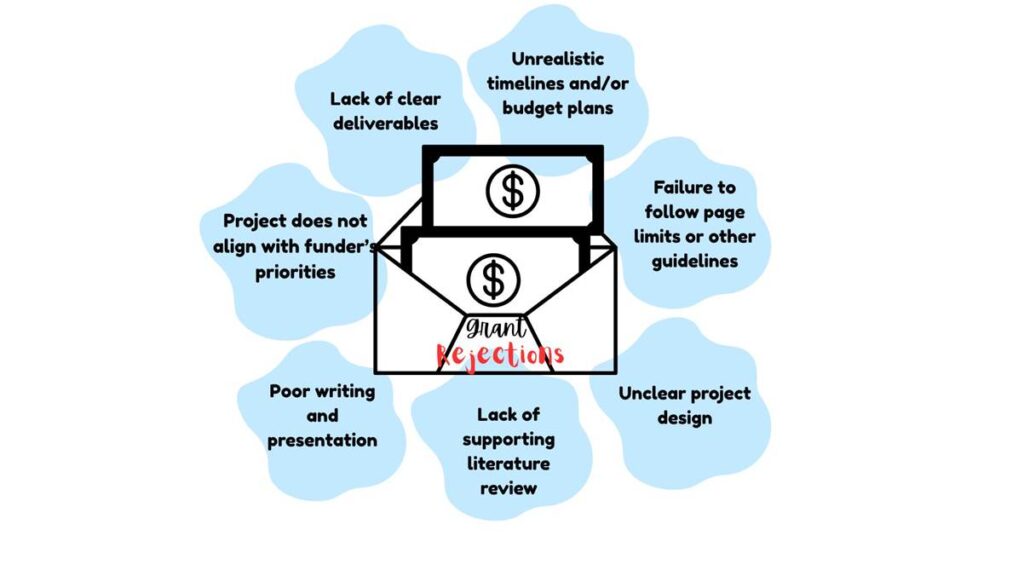
I’m part of the Neuro-Innovation PhD Programme at the University of Eastern Finland, which gave me a four-year funded position. Still, I applied for grants throughout my PhD—partly to practice writing them, and partly because every PhD survivor I talked to warned me that things rarely go exactly as planned. Over three years, I have collected a respectable pile of grant rejections, along with two acceptances serving as a beacon of hope. People love to say that rejection is just part of academic life, something you eventually “get used to.” And maybe that’s true but every time an email starts with “There were many applications this year…” and ends with “Unfortunately…”, my heart does a very familiar sink.
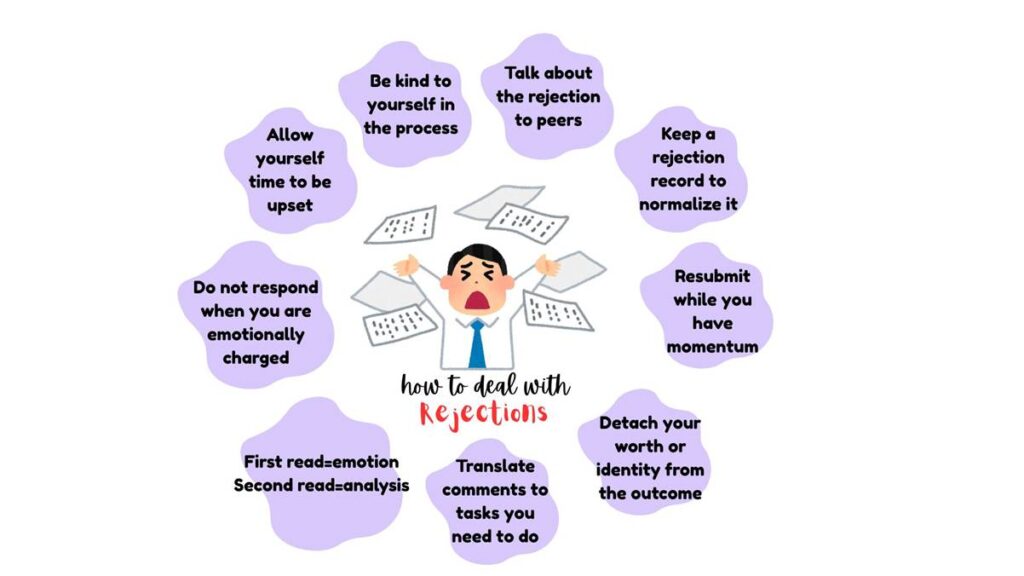
So instead of thinking that academic rejection is just something we need to get used to maybe we need to think about methods of dealing with these emails which we feel are telling us that we are not good enough. Of course, the recurrent paper rejections did send me into a quite a rabbit hole of searches and I did what I was trained to do for these 3.5 years: read through a bunch of things fast and then discuss it. So the following figures are meant to sum up a 5-hour long spiral about the “Why”s and the “How”s.
If you have any more pointers, I’m always happy to take them—PhD students tend to enjoy solicited advice far more than unsolicited rejection emails.
Meheli Banerjee works as a doctoral researcher in the Neuro-Innovation PhD programme. Her research focuses on non-coding RNAs in the context of seizures and traumatic brain injury.