
Kanishka: Why are Animals used in research?
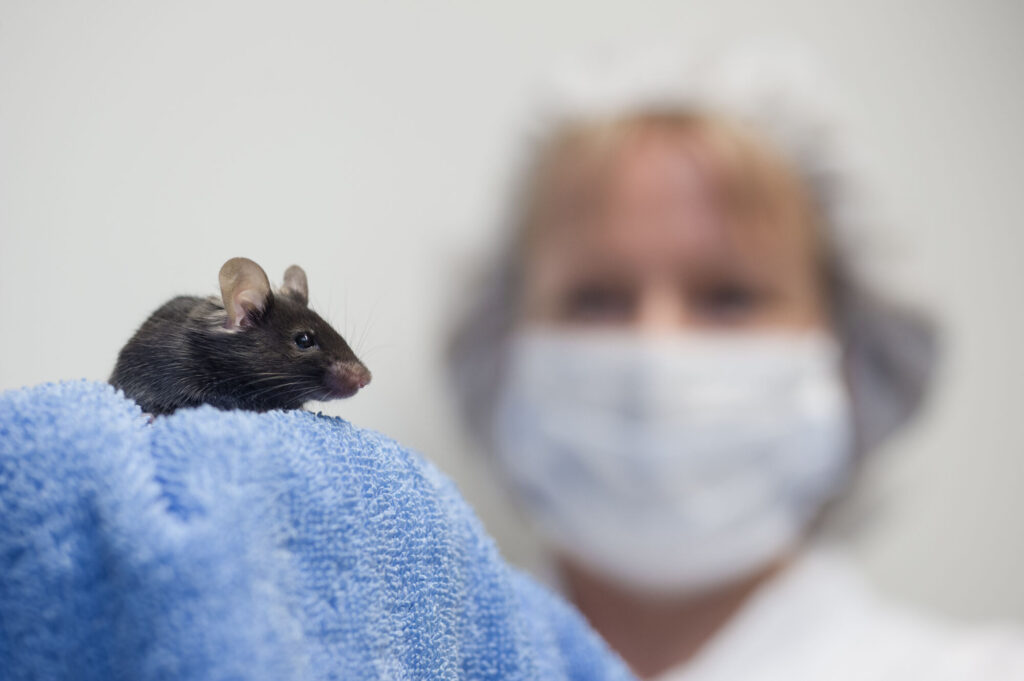
I am (and some of you might be?) a researcher, and some of my experiments involve rats and mice.
For some readers, that sentence alone may be uncomfortable. Some may immediately question whether animals should be used in research at all. Others may simply wonder: What kind of experiments? Why animals? And what actually happens to them?
These are fair questions.
Humans have an interesting relationship with other animals. Biologically, we are animals ourselves, sharing much of our basic anatomy and physiology with other mammals. Evolution has shaped each species differently, but it has not built us from completely separate biological blueprints. Our brains, hearts, immune systems, hormones and genes differ in important ways, yet many of the fundamental mechanisms remain remarkably similar.
That similarity is one reason animals have played such an important role in biomedical research.
Today, we have increasingly sophisticated alternatives: cell cultures (derived either from human and animal cells), computer models, organoids, human imaging and other experimental systems. AI is also emerging as a promising tool for modelling biological processes. These approaches are enormously valuable and should be used whenever they can adequately answer a scientific question. But a living organism is more than a collection of isolated cells.
The brain communicates continuously with the heart, hormones, immune system and the rest of the body. Diseases often affect several systems at once. For questions involving these complex interactions, it is not always possible to reproduce the biology completely in a dish or computer. This is one reason animal models are still used in certain areas of research.
But scientific usefulness does not make animal experimentation ethically simple. If we choose to involve an animal in research, we also take responsibility for its welfare.
Animal experiments are sometimes imagined as rather mechanical procedures: perform the experiment, collect the data, analyse it and move on.
The reality contains much more care – the animals have to be monitored, handled, fed and observed closely. Small changes in behaviour, body weight, eating, grooming or movement can matter. Pain, stress and illness matter first because they affect the animal, but they also matter scientifically: an unhealthy or highly stressed animal can produce unreliable or misleading data.
I have reached a stage where, when one of my animals appears stressed, I become stressed too. And this creates an uncomfortable question for me: Am I worried because an unhealthy animal might compromise my experiment, or because I genuinely care about the animal?
Perhaps it does not have to be one or the other.
Good science and genuine concern for animal welfare are not opposing ideas. In fact, they should reinforce each other.
What has animal research contributed?
It is easy to forget how deeply animal research is woven into the history of modern medicine. Research involving animals has contributed to the development or understanding of insulin, vaccines, anaesthesia, organ transplantation, pacemakers, blood transfusion, medical imaging technologies and treatments for diseases including cancer, epilepsy and Parkinson’s disease. More recently, animal studies have also contributed to areas such as vaccine development and cancer immunotherapy.
Its contribution goes beyond treatments. Studying animals has helped scientists uncover fundamental principles of genetics, immunity, sleep, development, ageing, sensory processing and brain function.
And the benefits are not restricted to humans. Many discoveries arising from biomedical research have also improved veterinary medicine and the treatment of disease in animals themselves.
None of this means that animal experimentation should be accepted without question. Quite the opposite: every experiment should ask whether animals are truly necessary, whether fewer animals could be used and whether the procedures could be made less invasive.
This idea is captured by the 3Rs:
- Replacement — use non-animal alternatives whenever possible.
- Reduction — use the minimum number of animals needed to obtain reliable scientific information.
- Refinement — improve procedures, housing and care to minimise pain, distress and suffering.
Importantly, improving animal research is not simply about choosing between animal and non-animal methods. It also means continually improving how research is designed, conducted and communicated.
A few common myths
Myth: Humans and animals are too different for animal research to be useful.
Reality: Species differ in important ways, but many fundamental biological and physiological mechanisms are shared across mammals. Carefully chosen animal models can therefore help scientists investigate particular aspects of human biology and disease.
Myth: Scientists use animals even when alternatives exist.
Reality: Researchers are expected to consider alternatives and follow the principles of Replacement, Reduction and Refinement. Animal experiments should be used only when the scientific question cannot be adequately answered by another suitable method.
Myth: Animal research is poorly regulated.
Reality: Animal studies are subject to ethical review, regulatory requirements and institutional oversight. Researchers must justify why animals are needed, how many are required and how pain and distress will be minimised.
Animal research therefore sits in an uncomfortable but important space.
It has contributed greatly to what we know about biology and medicine, yet its use carries a responsibility that should never become routine or invisible. Perhaps the goal should not be to become completely comfortable with animal experimentation, the goal should rather be to remain thoughtful enough to keep asking whether it is necessary, whether it can be improved, and whether we are giving the animals involved the care and respect that responsibility demands.
References and further reads:
- Thompson-Iritani SA, Newsome JT. Animal Research at a Crossroads: Strengths, Weaknesses, Opportunities, and Emerging Threats. Journal of the American Association for Laboratory Animal Science. 2025 Jul;64(4):546–550. doi:10.30802/AALAS-JAALAS-25-020.
- https://grants.nih.gov/policy-and-compliance/policy-topics/air/why-animals-are-used-in-research
- https://www.uef.fi/en/service/lab-animal-centre
- LAC internal page: https://studentuef.sharepoint.com/sites/KEK-tutkija/SitePages/en/Home.aspx