
Melika Azim Zadegan: Between Present Challenges and Future Promises – The Invisible Work Behind Remote Monitoring
When we talk about digital health innovation, the conversation often focuses on promises about the future. We hear about technologies that will make healthcare more efficient, support patients’ independence at home, and help address workforce shortages. These promises matter because they shape investments, policies, and expectations around healthcare digitalisation.
Yet while conducting research for our recent study, I became increasingly interested in a less frequently discussed question: “What do healthcare professionals experience and expect from a digital health innovation in everyday practice during the pilot phase, when its future, its benefits, and even the ways of working around it are still uncertain?”
This question guided our study, Tensions in Remote Monitoring: Nurses’ Everyday Work in Digitally Supported Care, conducted together with my co-authors. We explored how healthcare professionals experienced home-based remote monitoring during a pilot project involving older patients with neurological conditions and how they imagined the future of this emerging form of care.
The Invisible Work of Nurses in Remote Monitoring
Drawing on interviews with nurses and physicians participating in a remote monitoring pilot, and through the collaborative and iterative process of analysing and discussing the data with my co-authors, we began to see aspects of digital healthcare innovation that are often overlooked.
What surprised me most was not only how much work takes place behind the scenes, particularly for nurses, but also how often conversations about that work moved between present challenges and future possibilities. Healthcare professionals rarely discussed remote monitoring only in terms of what it currently was. They also spoke about what it might become, and these future expectations shaped how they understood their everyday work.
Throughout the analysis, I learned that many of these efforts, from supporting patients and solving technical problems to interpreting data and coordinating care, remain largely invisible in discussions of digital health innovation. Yet these activities were essential for making remote monitoring work in practice and were closely intertwined with expectations about how the technology and work practices might develop in the future.
Home-based remote monitoring is often presented as a technology that enables more independent patients and more efficient healthcare. Yet the nurses and physicians we interviewed described spending significant time teaching patients how to use monitoring devices, solving technical problems, monitoring incoming data, and coordinating care across organisational boundaries. These activities were essential for making remote monitoring possible in practice.
From the outside, remote monitoring may appear straightforward: patients use devices at home, and healthcare professionals receive the data to support clinical decision-making. In practice, however, making this process work required considerable effort, organisational arrangements, and continuous coordination across professional, organisational, and technological boundaries. Nurses and physicians had to observe and interpret the incoming data, make it meaningful for clinical decision-making, and ensure that remote monitoring functioned as a viable form of digitally supported care.
As the study progressed, we noticed that healthcare professionals were not simply describing their current experiences or future expectations. Instead, they were constantly moving between present challenges and future possibilities. Difficulties encountered during the pilot were often discussed alongside expectations that remote monitoring technologies, workflows, and systems would improve over time. This interplay between present experiences and anticipated futures eventually became central to our analysis.
We identified five recurring tensions in nurses’ and physicians’ accounts of remote monitoring work:
- Supporting older patients in using monitoring devices while expecting greater patient autonomy in the future.
- Managing additional workload while anticipating future efficiency through routinised workflows.
- Balancing technical maintenance work with aspirations for clinically meaningful data interpretation.
- Selecting patients who can currently participate while envisioning broader inclusion through improved usability and automation.
- Coordinating care across fragmented systems while anticipating more integrated information sharing and collaboration.
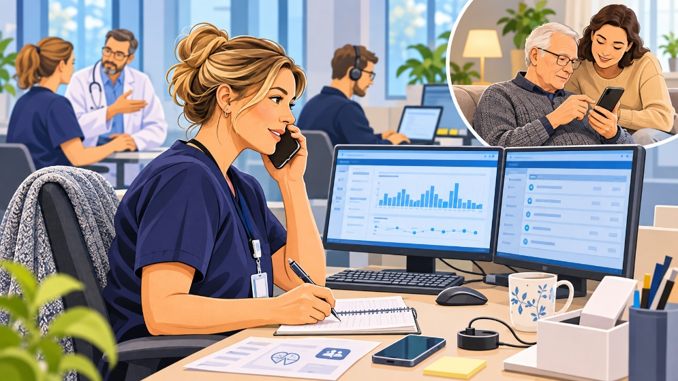
Image: AI-generated illustration inspired by the empirical findings of the study. Created using ChatGPT (OpenAI).
What Can We Learn from These Tensions?
Rather than viewing these tensions as temporary obstacles that would disappear as the technology matured, we came to understand them as enduring features of digitally supported care. Healthcare professionals continuously navigate these tensions while making sense of both their current work and what remote monitoring might become in the future.
For me, the key lesson from this research is that digitalisation is never only about technology. It is also about the people who use it, the work required to make it function, and the expectations that shape its development. By paying attention to healthcare professionals’ experiences during the early stages of implementation, we gain a deeper understanding of how digital innovations reshape everyday care. Innovation, in this sense, is less about replacing existing practices and more about transforming them through the ongoing interplay between present realities and imagined futures.
Melika Azim Zadegan is a Doctoral Researcher at the University of Eastern Finland. The study was conducted within the Neuro-Innovation PhD programme.
Read article: Azim Zadegan M, Eriksson P, Aromaa E, Montonen T. Tensions in Remote Monitoring: Nurses’ Everyday Work in Digitally Supported Care. Global Qualitative Nursing Research. 2026;13. doi:10.1177/23333936261493300