
Postdoctoral Researchers
Our Postdoctoral Researchers are selected through two open calls. On this page, we will present each postdoc after they have started their project.
- Postdoc: Memduh Eren Giderler, Neuro-innovation and Impact (NOVA) research group, UEF Business School, Faculty of Social Sciences and Business Studies
- Project: Governing Negative Social Impacts of Health and Care Innovations on Brain Health: A Social Impact Assessment Perspective

Eren’s research explores how health and care innovations can give rise to negative social impacts that may adversely shape brain health and wellbeing. Drawing on a ‘Social Impact Assessment’ perspective, he examines these impacts as dynamic processes that can emerge and evolve over time as innovations are developed and implemented. Ultimately, the project seeks to contribute to more proactive and responsible approaches to innovation governance.
This matters because, as Eren puts it, “good intentions do not necessarily guarantee positive outcomes.” Social impacts can be understood broadly as the ways in which innovations affect people and communities — from their health and wellbeing to their everyday lives, relationships, rights, fears and aspirations. A digital health service, for example, may be designed to make care more accessible and efficient, yet it can unintentionally create frustration, anxiety or exclusion for people with low digital literacy or cognitive impairments, while placing additional burdens on family members or caregivers.
Eren’s research addresses the problem that such impacts can remain unnoticed or gradually become accepted as normal as innovations are developed and implemented. At the heart of the project is the concept of “micro-level social impact governance”: understanding how emerging impacts are recognised, discussed and addressed in the everyday decisions and practices through which innovations unfold. Effective social impact governance therefore requires the perspectives of service users, healthcare professionals, caregivers, families and other affected stakeholders to be taken seriously alongside those of the people who design and manage innovations. Bringing the experiences, concerns and suggestions of these stakeholders into the innovation process can help identify emerging problems early, before potentially harmful impacts become embedded in everyday practices and systems of care and become difficult to reverse. It can also help strengthen the positive social impacts that innovations are intended to create.
During his postdoc, Eren is especially excited to collaborate with Finland’s health and care innovation ecosystem, learn from diverse stakeholders, and contribute to the development of the SIGHT Toolkit (Social Impact Governance for Health and Care Innovation Transitions), a practical framework for more responsible health and care innovation.
In the long run, Eren’s research could benefit the wide range of stakeholders involved in or affected by health and care innovation, from service users and healthcare professionals to organisations, policymakers, and innovation practitioners.
Outside of research, Eren enjoys travelling with as little planning as possible and embracing the unexpected along the way. A former professional chess player, he still enjoys the game as an amateur — but when he travels, he’s happy to leave the next move to chance!
- Postdoc: Dr. Stefanie Klima, Human Brain Disease Modelling research group, A.I. Virtanen Institute for Molecular Sciences, Faculty of Health Sciences
- Project: Delineating disease mechanisms in Parkinson ‘s disease (PD) progression and identifying biomarkers in deep brain stimulated (DBS) patients
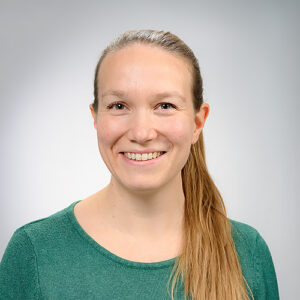
Stefanie’s research aims to reveal processes that are disturbed in the brains of patients suffering from Parkinson’s disease. She will analyse patient material and compare these findings to results obtained from patient-derived in vitro model systems.
Through her research, Stefanie hopes to get a better understanding of mechanisms causing and progressing Parkinson’s disease.
“This is important, as the disease currently can’t be cured nor can the progression be effectively halted. Even worse, Parkinson is the fastest growing neurodegenerative disease worldwide with a prevalence expected to double within the next 20 years. It places a huge burden on patients, family, healthcare systems, and economies with an estimated average annual cost for treatment of 21.000€ per PD patient in the EU. This does not account for social impacts like loss of income and social isolation of caregivers.”, Stefanie explains.
In the long run, her research will hopefully have an impact on improved healthcare for patients and also on the wider society, as not only patients are affected by Parkinson’s. The project will identify mechanisms crucial in Parkinson’s disease. The identified mechanisms will function as potential targets used in drug discovery to develop new medications more effectively treating Parkinson’s disease.
During her recently started postdoc period, Stefanie is looking forward to the combination of being able to fully immerse herself in this exciting topic for three years and to also get the opportunity of developing her career.
“I hope to sharpen my personal profile: To this end I am going to identify which skills I can develop further, and addressing these skillsets by assembling and attending a tailored training schedule comprising different areas (methods, leadership, project management, grant writing). Besides the work-related topics, I look forward to immersing into the Finnish culture, doing my best to learn some Finnish, getting to know the Finnish cuisine and way of living”, she shares.
Outside of research, Stefanie enjoys being outside in nature for hiking, rowing, climbing, camping and skiing. She also enjoys doing pottery, sewing, knitting, and cooking.
Fun facts about her: in German, her last name means “Climate”. She also had diplomatic status for a couple of years!
- Postdoc: Dr. Eppu Manninen, Neurobiology of Memory research group, A.I. Virtanen Institute for Molecular Sciences, Faculty of Health Sciences
- Project: Development of next-generation MRI biomarkers in aging
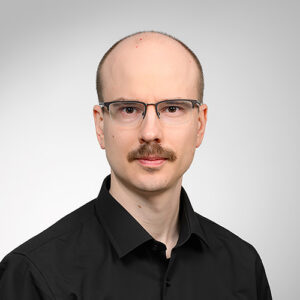
Eppu’s research aims at finding MRI-based biomarkers that can predict accelerated cognitive decline and other aging-related diseases, creating potential targets for interventions to promote healthier aging. “Aging is the most important risk factor for many diseases, including Alzheimer’s disease and cognitive decline. Magnetic resonance imaging (MRI) is a safe imaging modality that can be used repeatedly to track longitudinal changes in brain structure and function”, notes Eppu.
In the long run, Eppu’s research could lead to earlier detection of aging-related diseases, expanding the time window available for the effective application of treatments. It could also lead to new potential targets for drug development. Successful anti-aging interventions could increase the health, function, and happiness of people in their later years.
Eppu is looking forward to learning about and to researching new methods in the endlessly varied and exciting field of MRI during his 3-year postdoc in the NOVEL MSCA Postdoctoral Programme. “I also look forward to expanding my collaborative network which is a necessity in the highly interdisciplinary field of neuroscience”, says Eppu.
In his free time, Eppu enjoys playing guitar and bass. He is also fond of board games.