
Research
Speech and language pathology examines the development of speech, language, and interaction skills, the human voice, and swallowing functions, as well as their disorders across different stages of life.
At the University of Eastern Finland, logopedic research is multidisciplinary and internationally networked, combining perspectives from neuropsychology, linguistics, computer science, medicine, and machine learning, among others. Research topics include developmental language disorders and learning difficulties, children’s phonological development, the neural basis of speech, the human voice, and speech and communication disorders following cerebrovascular accidents (strokes). Research collaboration is carried out broadly with national and international research groups, extending across disciplinary boundaries.
LogoLab Combines Research, Teaching, and Intervention
The LogoLab research infrastructure provides a modern framework for both research and teaching. Speech and language pathology students have the opportunity to participate in research projects during their studies, for example, as part of data collection during clinical practice. Read more about LogoLab.
Developmental Language Disorder and Learning Difficulties – DLD-Global
Developmental Language Disorder (DLD) affects 7.5 percent of children, which means these children face significant challenges in language acquisition. Language is the primary form of human communication, and it is therefore essential to understand why someone develops DLD and how it can be prevented. Led by Professor Marja Laasonen and funded by the Research Council of Finland, the DLD-Global project investigates the background factors, developmental trajectories, and underlying mechanisms of DLD across two international longitudinal cohorts (HelSLI and ELVS) using cutting-edge machine learning and network analysis methods. The results will improve early prediction, identification, and prevention globally across different languages and cultures. DLD-Global enhances understanding of the root causes of DLD, but this knowledge also assists those struggling with other developmental and learning challenges. Our findings advance clinical practices and mitigate the consequences of DLD. In this way, DLD-Global promotes equality so that everyone can reach their full potential.
Neural Basis of Speech Research and Technology-Assisted Speech Therapy
Experimental research on neural speech mechanisms is conducted in the multidisciplinary speech and language research laboratory LogoLab. The Multimodal Processing of Speech project explores how the brain mechanisms behind speech production and listening are connected, and how real-time tracking of tongue movements via ultrasound affects these processes. The goal is to discover new, evidence-based methods for unintelligible speech interventions. Related to this topic, data collection is currently underway regarding ultrasound-assisted intervention: speech therapy utilizing real-time ultrasound feedback is being carried out in conjunction with students’ clinical training.
LogoLab is an excellently equipped research infrastructure that is being further developed under the ERDF-funded aTOOR project (Advanced Technologies as Tools for Teletherapy). This project addresses regional challenges in North Karelia and Eastern Finland: the accessibility of therapy services in sparsely populated areas and the shortage of speech therapists. The project utilizes virtual reality (VR), 360° imaging technology, and motion tracking methods to develop objective and partially location-independent intervention methods.
Human Voice Research
The research of Title of Docent Sofia Holmqvist-Jämsén, who began as the Research Director of Speech and language pathology in autumn 2026, focuses on the human voice and its disorders. At the University of Eastern Finland, she leads a research project examining vocal health and vocal risks at different life stages, investigating topics such as voice function under strain and stress, the impact of the acoustic environment and acoustic conditions on vocal well-being, and vocal symptom screening. In addition, she leads the Voicing the Costs (VOI.C.E.) project, which examines the economic burden of voice problems for individuals and society, and researches gender-affirming voice therapy in the THRIVE project (Transgender Health Research on Identity and Vocal Expression). With Holmqvist-Jämsén’s arrival, human voice research is also strengthened as part of LogoLab’s multidisciplinary research activities.
Children’s Phonological Development and Related Difficulties
University Lecturer Anna-Leena Martikainen’s research focuses on typical phonological development in children. Her research also addresses difficulties in phonological development, their identification, and their intervention.
Interested in hearing more or participating in research?
Contact Associate Professor Satu Saalasti ([email protected]) or Professor Marja Laasonen ([email protected]) and join us!
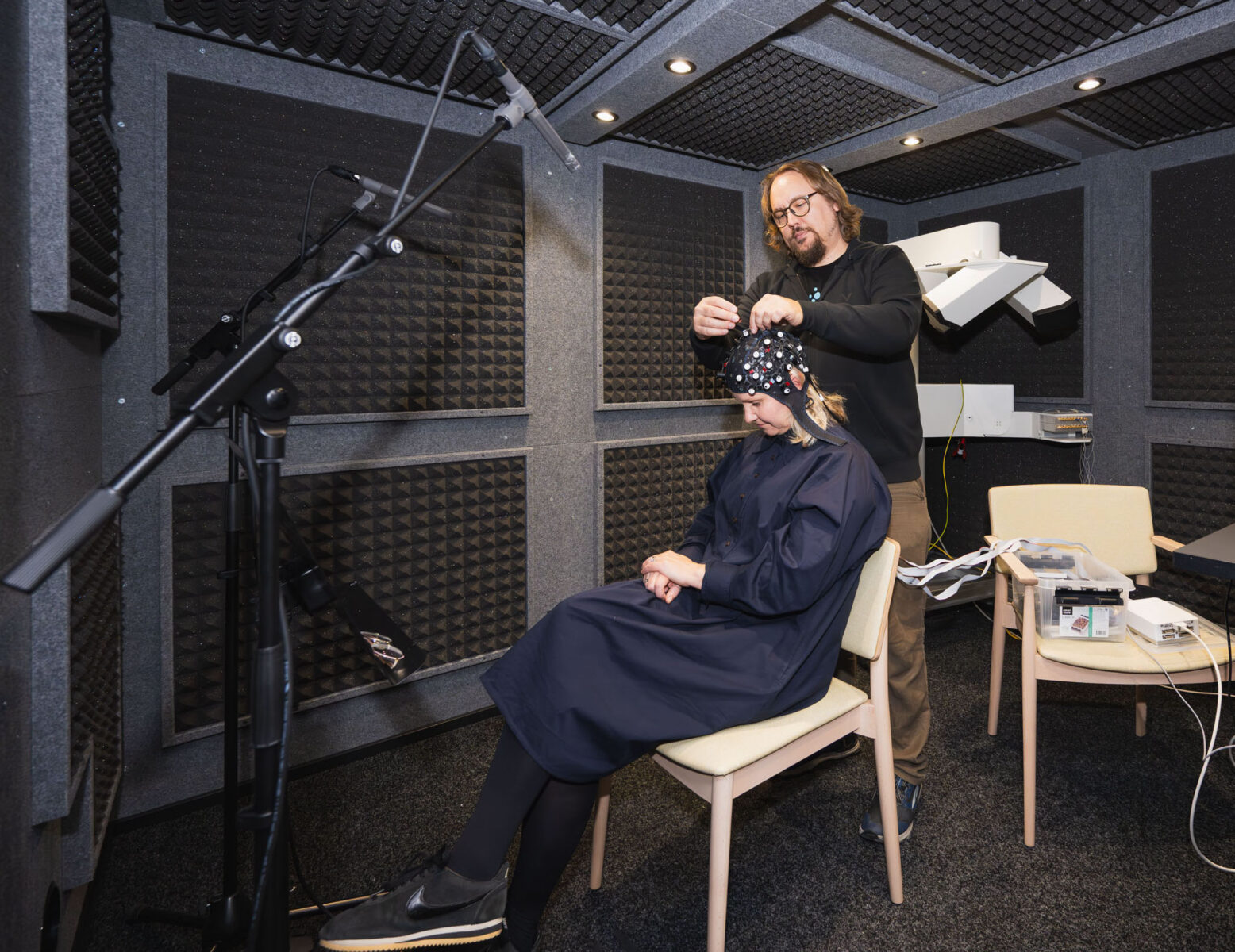
Photo: Niko Jouhkimainen, University of Eastern Finland