
OpenAR-G
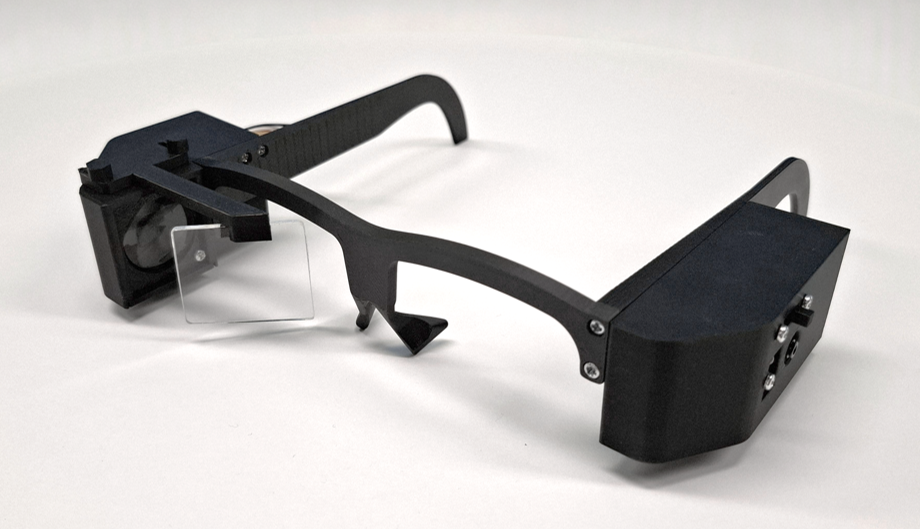
OpenAR-G (G for Gesture) extends the OpenAR platform with gesture recognition and wireless communication. By combining a compact AR device with an infrared gesture sensor, OpenAR-G lets you communicate through hand gestures.
OpenAR-G is a sister device to OpenAR-M, utilizing mostly the same design and components. The main change to the hardware is the incorporation of a gesture sensor and the ESP32C3 development board. When you perform a hand gesture, the sensor detects it and sends it to the microcontroller. This information is then transmitted wirelessly to another OpenAR-G headset, where it can be displayed or used to trigger an action. Each device identifies the other via MAC address, allowing bidirectional exchange of gestures.
Contactless interfaces
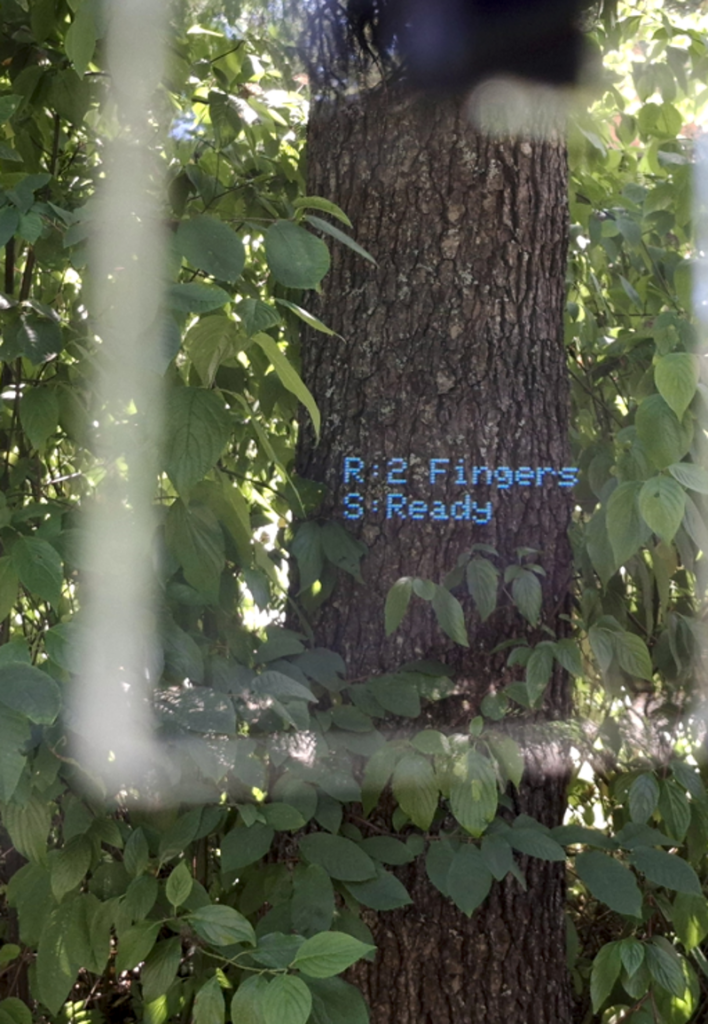
The gesture sensor opens up many possibilities beyond the demonstration software. Instead of using buttons, simple hand gestures could be used to navigate menus and control applications. For example, showing one, two or three fingers could select different menu options, while a swipe gesture could move to the previous screen.
This is just one example of what can be built with OpenAR-G. The next application is yours to invent.
Optical design
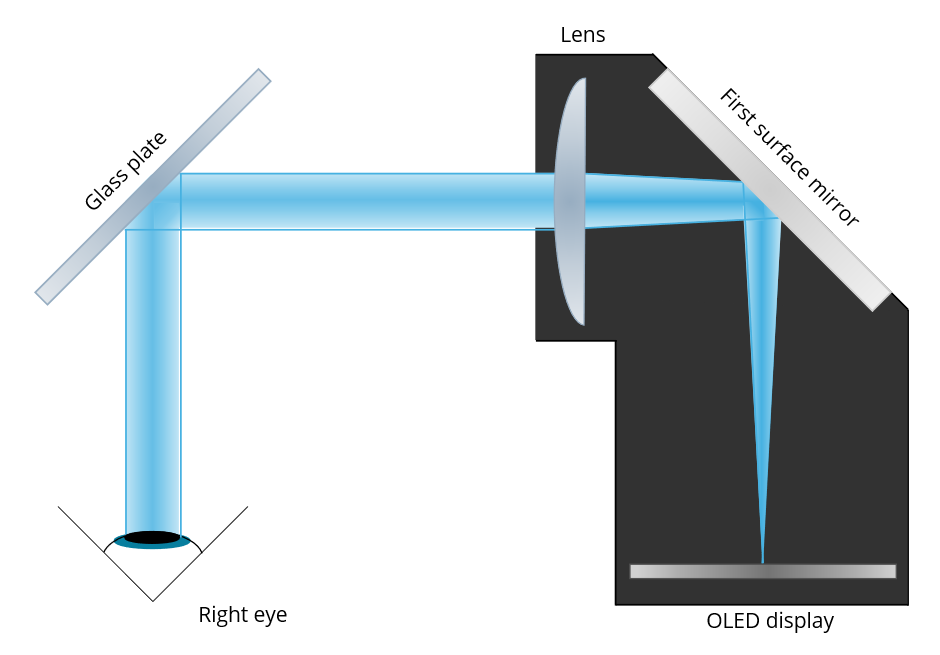
OpenAR-G uses a monocular optical system to reduce the number of components and the overall weight of the glasses. The image is only projected into a single eye while the other eye remains unobstructed.
How to make it
To build the OpenAR-G glasses, we used the components listed below. Note—they are only examples; many of them can easily be replaced. The following links will take you to retailers where you can purchase the parts, check their technical details, and look for similar products. Prices vary depending on the supplier; however, OpenAR-G can typically be built for approximately 85 €.
Display: 128×64 OLED display (16 €)
Glass: Cut from a plate of thin flint glass (2 €)
Lens: 50 mm focal length lens (26 €)
Mirror: Cut from a rectangular makeup mirror. We removed the reflective coating from the back of the mirror to create a first surface mirror, but true first surface mirrors are also available for purchase. (2 €)
Development board: XIAO Seeed Studio ESP32C3 (5.50 €)
Battery: Rechargeable 3.7 V 500 mAh LiPo battery (5 €)
Gesture sensor: Grove Smart IR Gesture Sensor (PAJ7660) (25 €)
Accessories: For example, M2 bolts x 23 (10 mm), M2 nuts x 5, thin electrical wire etc. Complete list of items and tools are provided in the documentation. (~5 €)
The frame of the glasses can be 3D-printed using regular PLA filament. The 3D-printed components may require modifications to ensure a comfortable fit or to accommodate the specific optics and electronics you are using.
Watch the video below to see how the headset comes together!
Downloads
Click the following links to download the files.
- Full archive (8 MB)
- Documentation (PDF)
The documentation provides general information on the optical design, the circuitry, the 3D parts as well as a guide to uploading the code to the Arduino board. It is recommended reading to get the full picture of how the device works.
The full archive contains (besides the documentation) the 3D models, the code, and the assembly instructions. The 3D models are available in STEP, STL and 3MF formats. The STEP file can be used with CAD software such as Autodesk Fusion for modifying the design, while the STL and 3MF files are ready for slicing and printing. The Arduino code is provided in the INO file. The assembly instructions contain a full parts listing, the settings we used for 3D-printing, a circuit diagram for soldering, and detailed instructions for preparing the optical components, as well as the step-by-step assembly of prepared components.
Licenses
3D model files: OpenAR © 2026 by University of Eastern Finland is licensed under CC BY-NC 4.0. To view a copy of this license, visit https://creativecommons.org/licenses/by-nc/4.0/
Demo program: Copyright 2026 University of Eastern Finland. Licensed under the Apache License, Version 2.0 (the “License”); you may not use this file except in compliance with the License. You may obtain a copy of the License at https://www.apache.org/licenses/LICENSE-2.0. Unless required by applicable law or agreed to in writing, software distributed under the License is distributed on an “AS IS” BASIS, WITHOUT WARRANTIES OR CONDITIONS OF ANY KIND, either express or implied. See the License for the specific language governing permissions and limitations under the License.