
OpenAR-M
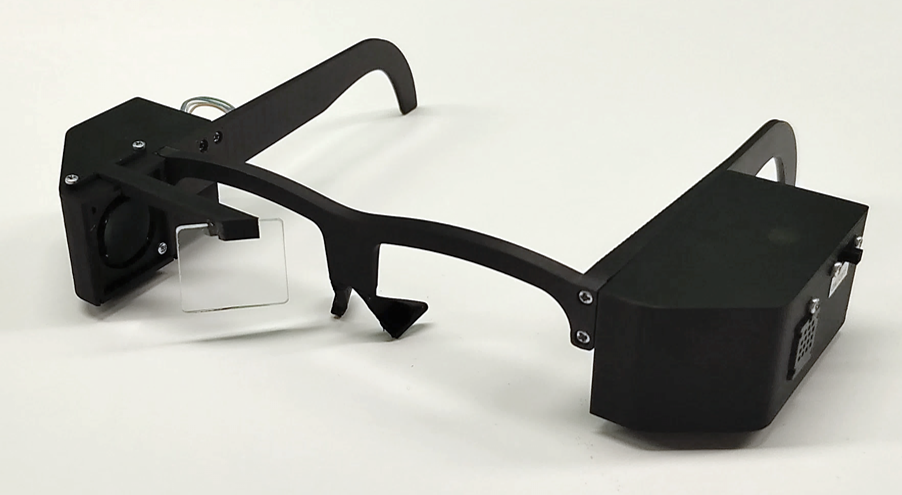
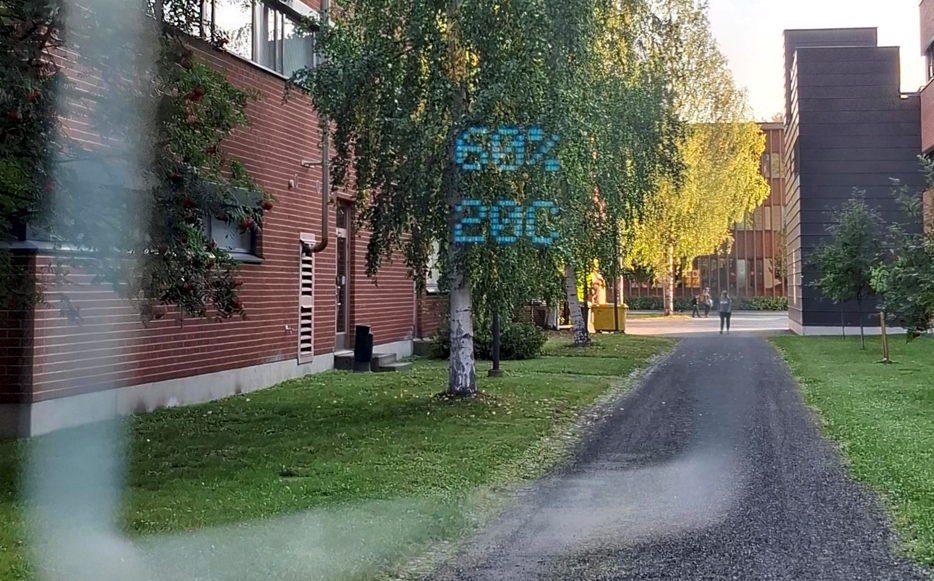
OpenAR-M introduces environmental sensing through an integrated temperature and humidity sensor that measures ambient conditions every few seconds. The measurements are displayed on the OLED screen and projected directly into the user’s field of view through the optical system.

OpenAR-M is smaller, lighter and easier to build than its predecessors. Unlike the previous models, the image is reflected only to a single eye. With a weight of 100 g, this model can be worn like regular eyeglasses. Additionally, the components have been positioned towards the temples as much as possible to reduce pressure and improve balance.
Optical design
The optical system consists of an OLED display, a mirror, a lens, and a partially reflective glass plate. Light emitted by the display is first reflected by the mirror and then passes through the lens, which collimates the light. The collimated light is then reflected by the glass plate into the user’s right eye, creating a virtual image within the user’s field of view. The user can simultaneously see both the projected information and the surrounding environment.
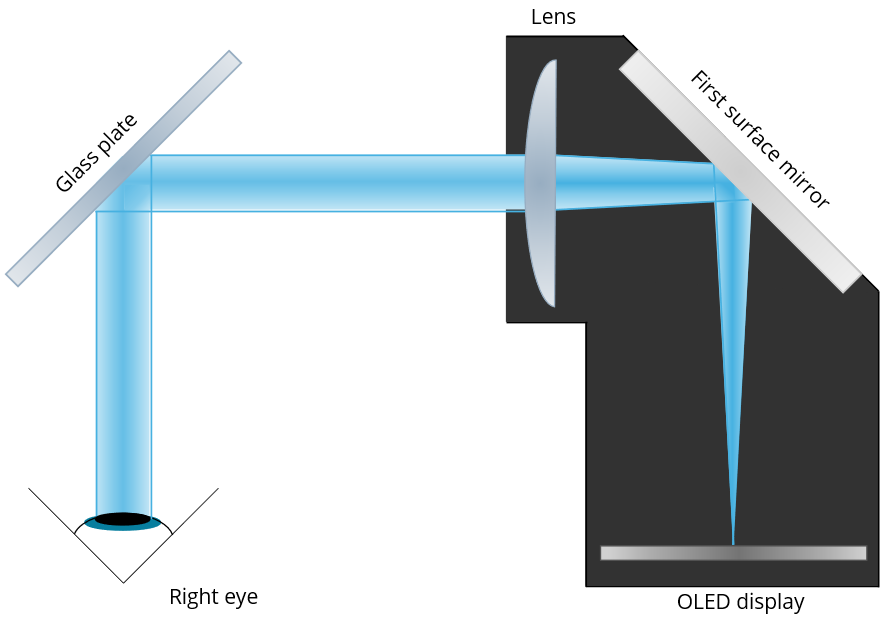
Because the light reaching the eye is collimated, the virtual image appears at a comfortable viewing distance. This reduces the need for the eye to constantly refocus between the displayed information and the surrounding environment.
How to make it?
To build the OpenAR-M headset, we used the components listed below. Note—they are only examples; many of them can easily be replaced. The following links will take you to retailers where you can purchase the parts or look for similar products. Prices vary depending on the supplier; however, the OpenAR-M glasses can typically be built for approximately 90 €.
- Display: 128×64 OLED display (16 €)
- Glass: Cut from a plate of thin flint glass (2 €)
- Lens: 50 mm focal length lens (26 €)
- Mirror: Cut from a rectangular makeup mirror. We removed the protective coating from the back of the mirror to create a first-surface mirror, but true first-surface mirrors are also available for purchase. (3 €)
- Development board: Arduino Pro Mini (12 €)
- Battery: Rechargeable 3.7 V 500 mAh LiPo battery (5 €)
- Battery charger: Type-C USB battery charger LiPo Amigo (16 €)
- Ambient sensor: AM2320 (7 €)
- Switch: Small slide switch (0.50 €)
- Accessories: For example, M2 bolts x 23 (10 mm), M2 nuts x 5, thin electrical wire, FTDI USB to serial converter etc. (~5 €)
The frame of the glasses can be 3D-printed using regular PLA filament. The 3D-printed components may require modifications to ensure a comfortable fit or to accommodate the specific optics and electronics you are using. A total of approximately 65 grams of filament is needed, resulting in a cost of only a few euros.
Downloads
The documentation includes in-depth information about the design of the headset, including 3D printing, optics and electronics. The assembly instructions provide you with a step-by-step guide to building your own headset with the same components that we used. You may also download the 3D models and our demo software from their respective links. The full archive contains all the mentioned documents and files in a single, compressed folder.
Click the following links to download the files.
- Full archive (3 MB)
- Documentation (PDF)
Licenses
3D model files: OpenAR © 2025 by University of Eastern Finland is licensed under CC BY-NC 4.0. To view a copy of this license, visit https://creativecommons.org/licenses/by-nc/4.0/
Demo program: Copyright 2025 University of Eastern Finland. Licensed under the Apache License, Version 2.0 (the “License”); you may not use this file except in compliance with the License. You may obtain a copy of the License at https://www.apache.org/licenses/LICENSE-2.0. Unless required by applicable law or agreed to in writing, software distributed under the License is distributed on an “AS IS” BASIS, WITHOUT WARRANTIES OR CONDITIONS OF ANY KIND, either express or implied. See the License for the specific language governing permissions and limitations under the License.