
From screams of joy to smart machines
Ugandan high school students build and train their own AI systems over the weekend
By Edward Miiro (PhD Student, University of Eastern Finland)
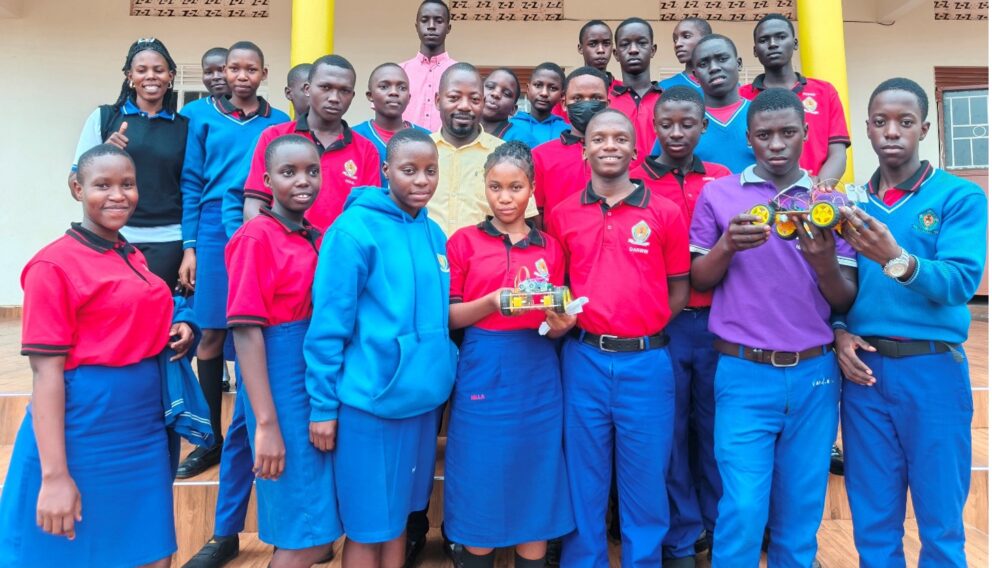
This past weekend, something extraordinary happened in a high school classroom in Uganda. Instead of the usual silence of routine lessons, the room was filled with excitement, curiosity and even screams of joy. Students were not just learning about technology.
They were building it.
They were programming it.
They were training it.
And for many of them, it was their very first encounter with robotics and machine learning.
Saturday: When a simple blink sparked big dreams
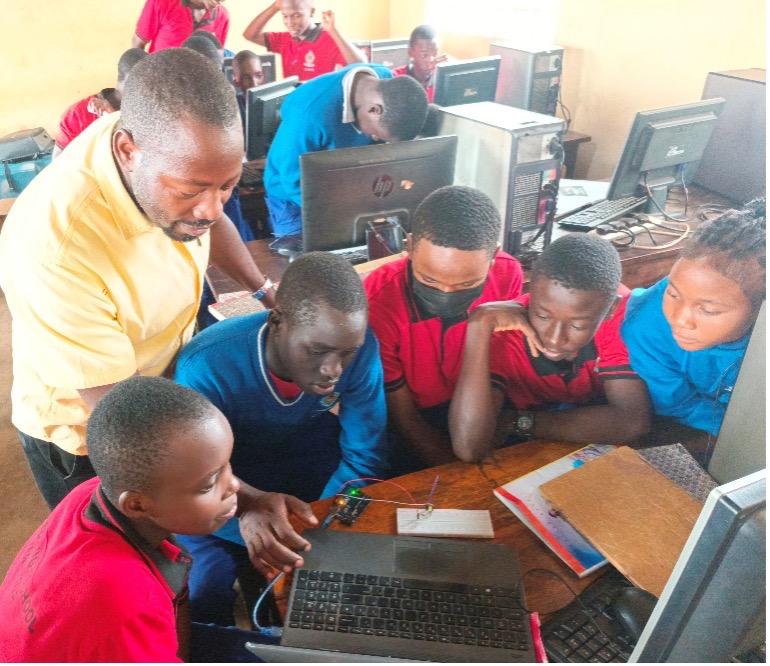
The workshop began with an introduction to robotics and artificial intelligence. Many students had heard of the term “AI” before, often associated with distant global tech giants. But this time, AI was not in Silicon Valley, it was right there on their desks.
Using Arduino microcontrollers, students wrote their very first program: the classic “Blink” project. When the LED light blinked for the first time, cheers erupted across the room. A simple flashing light had unlocked something bigger – confidence.
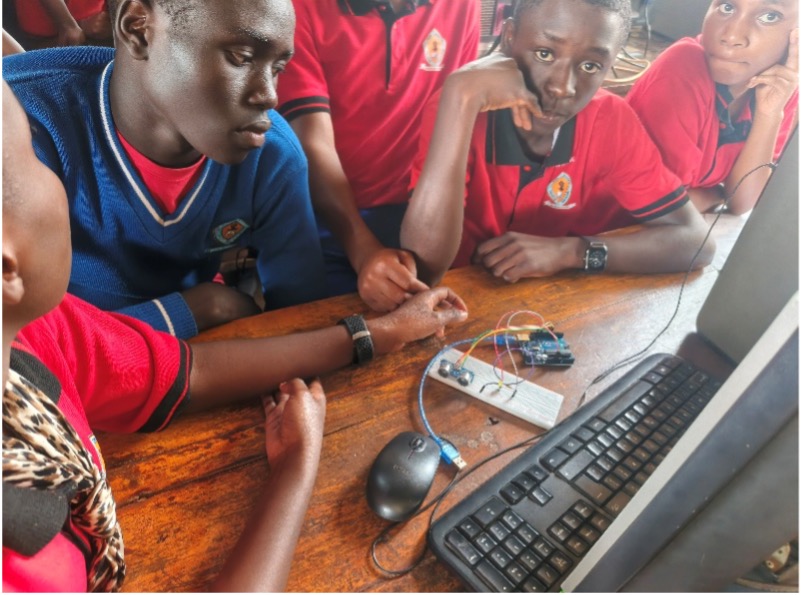
From there, the learners advanced quickly. They explored sensors and discovered how machines can respond to their environment. By connecting an ultrasonic distance sensor, students were able to control an LED using hand movements. When a hand moved closer, the light responded.
In that moment, machines were no longer mysterious. They were understandable, controllable and buildable.
Sunday: From robotics to Artificial Intelligence
On Sunday, creativity exploded. Students built a “Disco Light” project, transforming simple LEDs into rhythmic light displays. They designed a smart security lighting system using an LDR (Light Dependent Resistor) sensor – a system that automatically switched lights on and off depending on surrounding brightness.
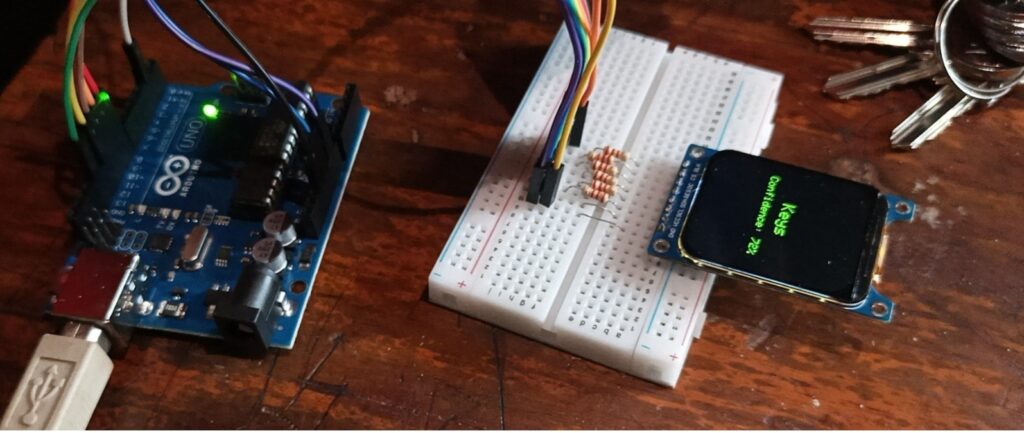
But the most transformative moment came when they were introduced to machine learning using state-of-art technologies, such as Google Teachable Machine and Edge Impulse. Each student used their own data to train machine learning models. They collected examples, labeled them, trained their models and tested them. When the models began producing accurate results, the reaction was unforgettable.
The students were not just using artificial intelligence. They were creating and training it. For many, it was the first time they truly understood that AI and computers do not think or work “magically” – they learn from data, and we can be in control of that.
The workshop concluded with an advanced and highly engaging project: a gesture-controlled lighting system. Students trained models to recognize different finger gestures. By raising different fingers, they could control LEDs in real time. Next was laughter, excitement and applause. Technology had become interactive, playful, and empowering.
Why this matters for Uganda
Across Africa, conversations about artificial intelligence often focus on consumption – using existing technologies developed elsewhere. But this workshop demonstrated something deeper: our students can create, innovate, and design intelligent systems themselves. When given access, mentorship, and hands-on experiences, young learners in Uganda demonstrate extraordinary potential.
This experiment was not just about robotics, it was about building confidence in STEM, demystifying artificial intelligence, promoting computational thinking, encouraging collaborative design and showing students that they belong in the future of technology.
A Model for the future
The workshop is part of a broader PhD research initiative exploring how co-designing robotics can make machine learning accessible to high school students in resource-constrained settings.
The approach is simple but powerful:
- Start with hands on robotics.
- Introduce sensors and real-world interaction.
- Gradually connect physical computing to machine learning.
- Allow students to co-design and experiment.
The result is: deep engagement, immediate excitement and real time understanding.
The success of this weekend workshop signals something important: there is a strong appetite for advanced technological learning among our youth. However, scaling such initiatives requires collaboration. With the right partnerships, this model can reach rural, urban, and resource-constrained schools across Uganda and beyond.