
Saimaa ringed seal
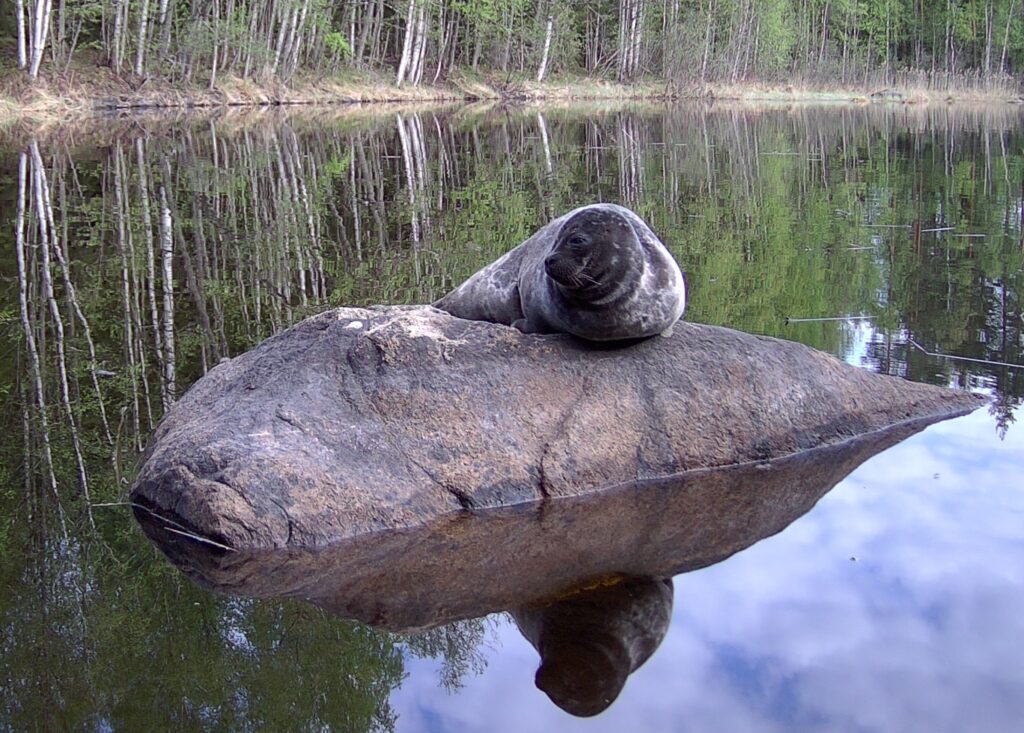
The Saimaa ringed seal (Pusa saimensis) is a unique, endemic freshwater seal that inhabits Lake Saimaa and has only recently been recognized as a species in its own right. The reference genome of the Saimaa ringed seal was sequenced and assembled from a male individual who, in addition to his formal identification code Phs449, is known as Tuukka.
A link to the genome assembly at the NCBI
A link to the genome assembly at ENA
A link to the BiorXiv preprint describing the genome
In 2023, Tuukka was translocated from the Pihlajavesi area to southern Lake Saimaa as part of genetic translocations aimed at maintaining genetic diversity and mitigating the isolation of Saimaa ringed seal subpopulations. During the translocation, and as part of a broader health assessment, a small skin biopsy was taken from Tuukka’s flipper. From this sample, a cell line was established in the laboratory. The cell lines maintained by the Biodiversity Genetics research group as a Cell Zoo provide an excellent and essentially inexhaustible source of high-quality DNA and RNA for genomic research.
Tuukka represents a rare example of a living individual whose genome serves as the reference genome for an entire species. Tuukka was selected as the reference individual because, as a male, he carries both the X and Y sex chromosomes.
Tuukka’s genome is 2.353 billion base pairs in length and consists of 15 autosomes as well as the X and Y sex chromosomes. It contains approximately 21,800 genes. In addition to the nuclear genome, Tuukka also carries mitochondrial DNA of 16,821 base pairs, representing haplotype H3.
For comparison, the human genome is approximately 3.2 billion base pairs long and consists of 22 autosomes and the X and Y chromosomes. Although the human genome is larger, it contains slightly fewer genes than the Saimaa ringed seal genome – around 20,000.
The Saimaa ringed seal reference genome was produced in collaboration with the research group of Stefan Prost at the University of Oulu.
The Saimaa ringed seal reference genome supports research and conservation
As its name implies, a reference genome serves as a benchmark against which the DNA of other individuals can be compared. As more Saimaa ringed seals are sequenced, their genomes can be aligned to this reference map, allowing researchers to identify where individuals differ from one another. This makes it possible to assess genetic diversity, relatedness, and potential hereditary risks.
Second, a reference genome enables the identification of genes and the study of their functions. Once gene locations are known, researchers can investigate which genes are involved in processes such as metabolism, immune function, reproduction, or adaptation to cold environments.
Third, the reference genome is a key tool for studying environmental adaptation and evolution. It allows researchers to search for signatures of natural selection—for example, which genes have changed unusually rapidly, which have remained highly conserved, and which may help the seal survive specifically in the conditions of Lake Saimaa.
In addition, the reference genome enables practical applications in conservation. It allows the development of precise genetic tools for individual identification, monitoring inbreeding, and supporting population management decisions. This knowledge is also being utilised in the EU-funded LIFE SOS project coordinated by the Metsähallitus Parks & Wildlife Finland.
Research on the Saimaa ringed seal has a long tradition at the Department of Environmental and Biological Sciences at the University of Eastern Finland. Ongoing research and projects can be explored on the Saimaa ringed seal research pages on UEF Connect.