
News
February 5, 2026
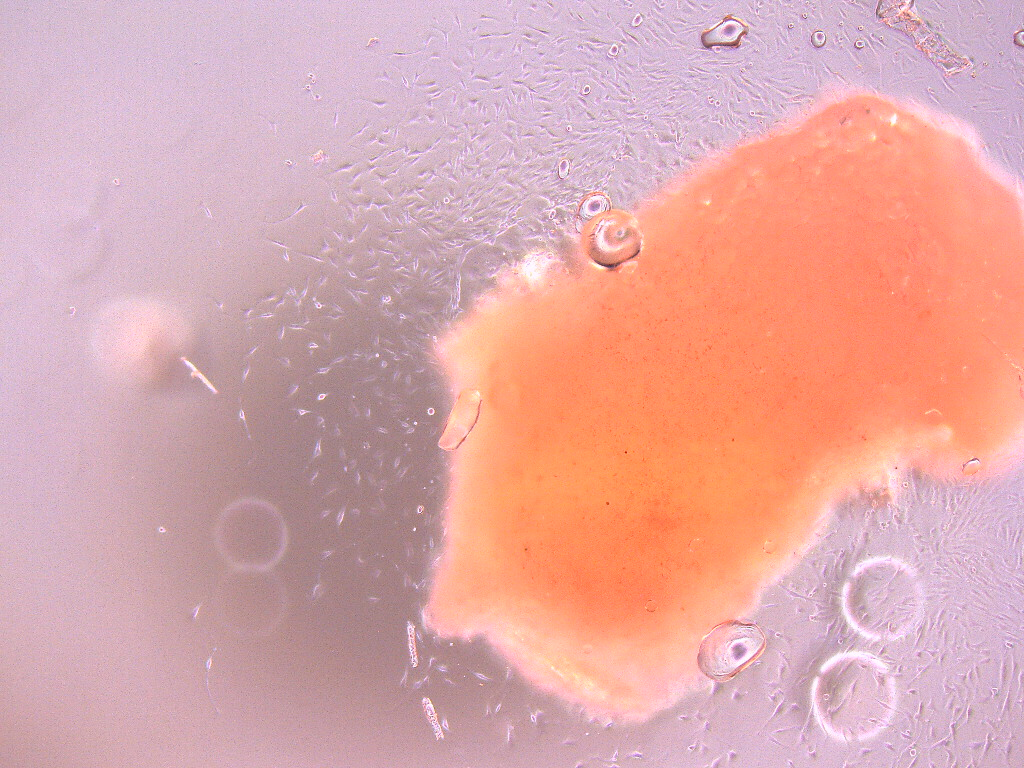
Yesterday, a sample arrived at the cell laboratory from the second Saimaa ringed seal to die in fishing nets this year. The animal was a young female found on 3 February 2026 in Sulkava, in the Tolvanselkä–Katosselkä population monitoring area. The previous case – a young male from Pihlajavesi – occurred on 22 January. Cells from this individual are already growing in the lab (photo).
During the current fishing-restriction season, a total of 33 Saimaa ringed seals have so far died in fishing nets. The situation is rather frustrating, as in the very same week volunteers have been shovelling artificial snowdrifts to create breeding lairs, because low snowfall this winter means fewer and thinner natural drifts for pups to be born in. A shortage of lairs increases pup mortality, for example because foxes can access the pups more easily than before.
Climate change is difficult to influence in the short term, but reducing – or eliminating – mortality caused by gillnet fishing would be very easy. There are gillnet fishing restrictions on Lake Saimaa, which have improved the issue, but the mortality of young seals as sidecatch remains high.
From population-level loss estimates, it is known that for every ringed seal reported to have died in fishing gear, two go unreported. Sidecatch mortality is the single most important cause of mortality for the Saimaa ringed seal and slows both population growth and range expansion. Although the population has been increasing slowly, faster growth would move the species out of its most critical state much more quickly. A larger population would be better able to buffer mortality caused by bad years and would in general be more resilient under a changing climate. The Saimaa ringed seal survived, for example, the Atlantic climatic period around 6,000 years ago, when Lake Saimaa was likely completely ice-free during some winters.
Animal-welfare considerations hardly need separate emphasis in this context. Due to their strong diving reflex, seals do not drown but suffocate slowly in fish nets.
Together with Saimaa ringed seal researchers from Parks & Wildlife Finland (Metsähallitus), we have been trying to identify suitable tissues that can be sampled in the field and from which living cells can still be recovered days after death. The resulting living cell lines complement the Saimaa ringed seal tissue bank maintained by Metsähallitus and the University of Eastern Finland.
Compared with frozen tissue, the advantage of cell lines is that they help preserve the remaining genetic variation of the species in living form and offer opportunities to study the Saimaa ringed seal’s metabolism, physiology, and sensitivity to environmental pollutants. In this way, the UEF cell zoo contributes to both basic research on the Saimaa ringed seal and its conservation.