
Finnish forest reindeer
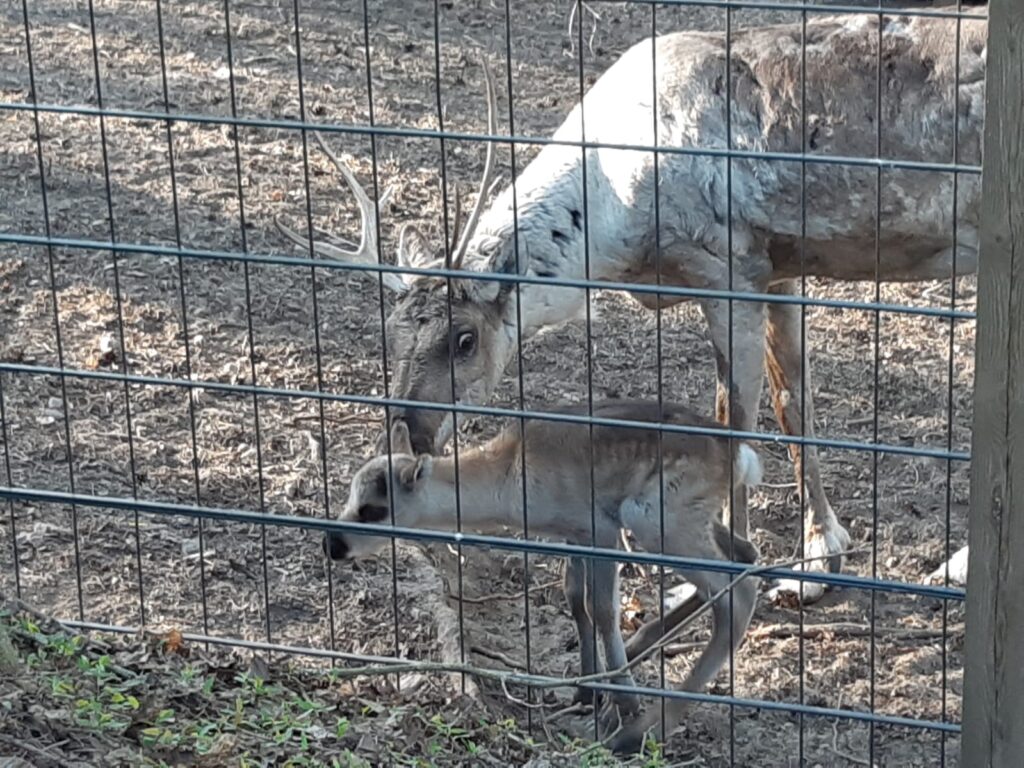
The forest reindeer (Rangifer tarandus fennicus) is a subspecies of reindeer adapted to the taiga forest zone and occurs only in Finland and northwestern Russia. Owing to its genetic characteristics, morphological traits, and specialized ecology, the forest reindeer has also been proposed to warrant full species status, although this view has not yet been widely accepted within the scientific community.
Like the caribou of North America, forest reindeer once formed herds numbering in the thousands, whose seasonal migrations also structured the annual cycle of human populations living by hunting and gathering. The cultural significance of the forest reindeer is reflected in numerous place names and stories, extending as far as the Kalevala. For example, the legendary Hiisi’s Elk was not an elk at all, but a forest reindeer; the tale describes a demanding persistence hunt of this animal. Forest reindeer hunting remained an important component of livelihoods in northern Finnish villages until the 19th century. Population growth combined with the introduction of efficient firearms ultimately led to the extinction of the forest reindeer in Finland by the late 1800s. Remnant populations persisted on the Russian side in White Karelia, from where the species gradually recolonized the Kuhmo region beginning in the 1950s. Between 1979 and 1984 forest reindeer were translocated to Suomenselkä, where the population is currently stronger than in Kainuu. There are also recent introductions to Lauhanvuori and Seitseminen national parks.
Although the forest reindeer is currently classified as Near Threatened rather than Endangered, its future in Finland remains uncertain. In addition to habitat fragmentation caused by forestry, transport infrastructure, and wind power development, this unique Finnish subspecies is increasingly threatened by climate change. Historically, the natural distribution of the forest reindeer in Finland covered the entire boreal forest zone, extending northward to Lapland. However, because the forest reindeer can hybridize with semi-domesticated reindeer, its expansion into the reindeer herding area is actively restricted. As a result, there is a risk that the subspecies will become squeezed into an increasingly narrow zone between the northern reindeer herding region and deteriorating southern habitats.
We are currently producing a high-quality, chromosome-level reference genome for the forest reindeer, made possible by funding from the North Karelia Regional Fund of the Finnish Cultural Foundation. The genome originates from a male fawn named Puolukka (Lingonberry), born at Korkeasaari Zoo. A small skin sample taken during ear tagging was used to establish a cell line in the laboratory. Such cell lines provide an excellent source of the high-quality DNA and RNA required for reference genome sequencing. The work is being conducted in collaboration with Stefan Prost’s group in the University of Oulu.
We hope that the reference genome will increase awareness of this culturally and biologically unique animal. The forest reindeer genome has been impoverished as a result of the population’s historical bottleneck, and the reference genome will provide a key tool for its conservation genetics. It will enable precise monitoring of genetic diversity, detection of hybridization with reindeer, and assessment of the viability and long-term persistence of different populations under changing environmental conditions.