Building up the voluntary carbon market: Insights from a stakeholder workshop
Translated and edited by Sara Tolonen, Doctoral Researcher
This blog post was first published on the University of Helsinki blog (11 February 2026).
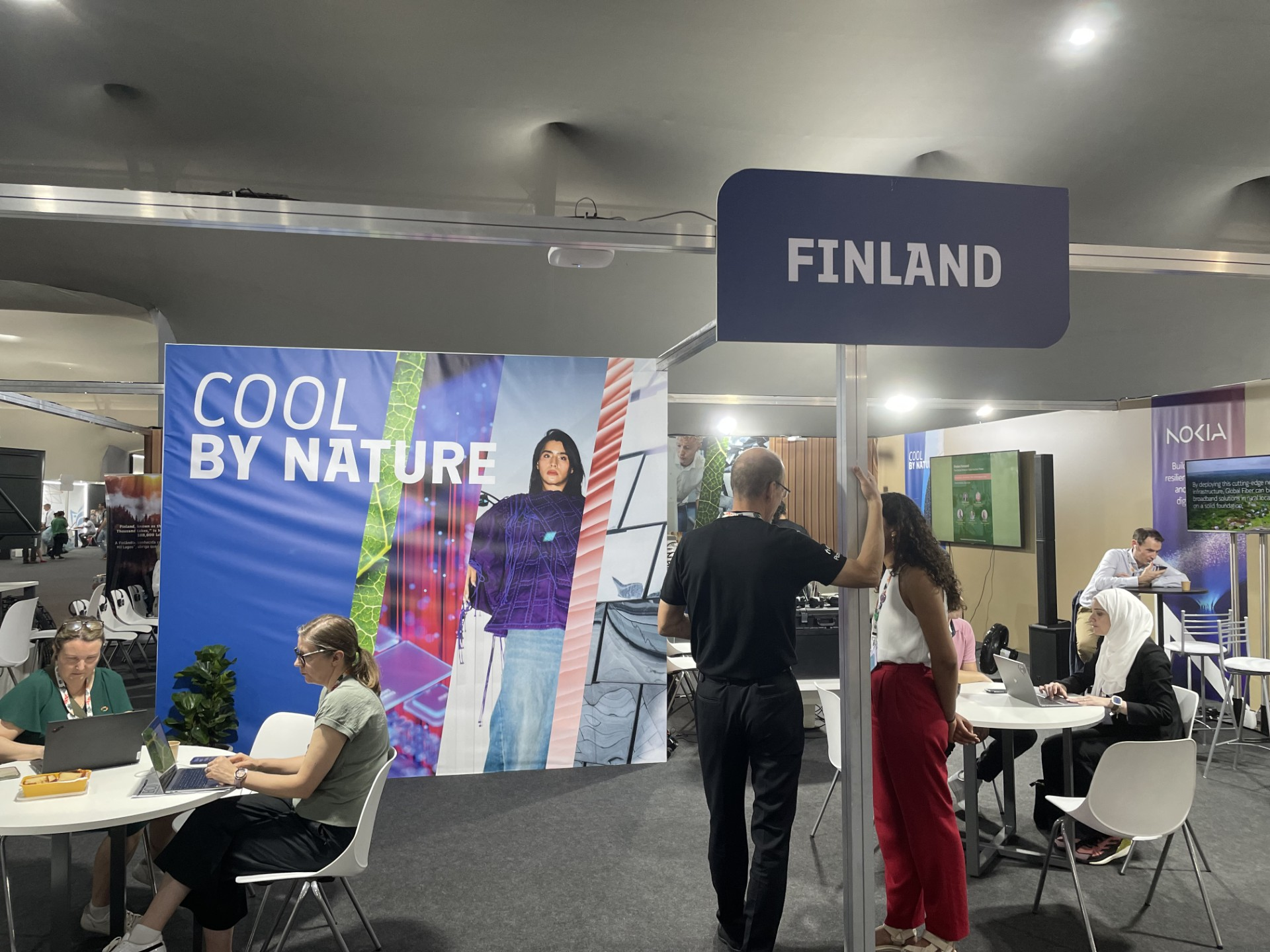
In January, the OFFCORR project organised a workshop in Helsinki focusing on the key building blocks of the voluntary carbon market. Around 30 experts gathered to explore pathways toward a more effective and credible market. The workshop combined introductory presentations with small group discussions. It was held as part of the OFFCORR project, which builds a knowledge base and develops best practices for voluntary carbon market. OFFCORR is an interdisciplinary research project comprising contributions from the fields of law, social psychology and political science. The CCEEL hosts a work package (WP) on regulation of voluntary carbon offsetting in Finland.
In the opening session, OFFCORR researchers presented findings from interview-based research capturing the perspectives of consumers, forest owners, and corporate buyers. External experts provided insights into the use of carbon credits (climate units) as part of the flexibility mechanism of Finland’s fuel distribution obligation, as well as the implementation of the EU Directive on Empowering Consumers in the Green Transition (ECGT).
The EU aims to increase the share of renewable energy in transport to 29% by 2030. Finland introduced a fuel distribution obligation but lowered its ambition in the early 2020s, allowing fuel distributors to meet their targets partly by offsetting emissions through activities in the land-use sector. Fuel distributors may fulfil up to one percentage point of their obligation through land-use sector measures, provided that the resulting emission reductions are twice the level of the obligation. Following a slowdown in the voluntary carbon market in recent years, considerable expectations have been placed on this flexibility mechanism to stimulate renewed market activity. Discussions among participants focused in particular on the legal requirements of permanence and the avoidance of double counting. Permanence is assessed on a case-by-case basis, and such measures may be counted both towards the distribution obligation and the national carbon balance.
The Finnish government proposal to implement the ECGT Directive is expected to be submitted to Parliament in the spring and should enter into force on 27 September 2026. There is very limited national discretion in implementation. The legislation will introduce a so-called “blacklist” of practices that are prohibited. In particular, claims that a product or service is carbon neutral will be prohibited where based on the use of carbon credits. However, companies may still make corporate-level carbon neutrality claims using credits. Products and services may also be marketed by indicating, for example, that a portion of their price goes towards financing climate action.
During the small group discussions, participants identified key challenges affecting voluntary carbon market functioning from multiple stakeholder perspectives and considered potential solutions. A central challenge in generating carbon credits remains the reliability of emissions reduction measurement and verification. Efforts are underway in the sector to develop automation and platforms to reduce associated costs. While robust, science-based verification is essential, participants also noted that scientific knowledge and methodologies continue to evolve, and that waiting for perfect solutions may hinder progress. It was further acknowledged that nature-based solutions inherently involve uncertainty, underscoring the need for clearer communication of such uncertainties.
The development of methodologies under the EU Carbon Removals and Carbon Farming Certification Framework Regulation (CRCF) has been relatively slow, and some participants expressed concerns about the suitability of standardised methodologies across diverse national contexts. It was suggested that lessons could be drawn from pilot projects and national initiatives (such as the flexibility mechanism in Finland and the Wald-Klimastandard in Germany), and that these could potentially receive EU-level recognition. This approach could enable progress without awaiting detailed CRCF guidance, allowing smaller-scale systems to advance.
Companies have recently shown reduced willingness to purchase carbon credits; however clearer emerging rules on environmental marketing may gradually improve market confidence. Participants expressed hope that advertising agencies would develop greater expertise in this area, reducing the burden on companies offering consumer-facing products and services. It was also noted that companies supplying credits often provide guidance to their clients, and that the Finnish Central Chamber of Commerce’s Business Practice Board can provide guidance on the use of specific environmental claims.
Consumer attitudes toward offsetting appear divided. On the one hand, there is often limited trust in markets, companies, and verification, and emissions reduction is not always perceived as a consumer responsibility. On the other hand, the belief that individual actions can make a difference motivates some consumers, who would welcome more visible and accessible offsetting options.
Participants also expressed interest in the development of a widely recognised and credible label for carbon credits, similar to the Nordic Swan ecolabel. It was noted that most consumers are unlikely to engage deeply with complex climate-related information, highlighting the need for clearer and more accessible communication tools. At the same time, the effectiveness of information-based guidance is questioned, and companies were encouraged to take greater responsibility for their emissions. Facilitating simple consumer choices, such as “one-click” climate contributions in online retails was also identified as a potential way forward.
While multiple challenges continue to constrain the development of voluntary carbon markets, progress is being made on several fronts. Voluntary carbon markets offer a significant opportunity to mobilise finance for climate action and to channel the engagement of environmentally motivated actors into concrete measures. The lively discussions at the workshop suggest a positive momentum for sector’s development in Finland.