Just transition advances at COP30, but concrete measures are still pending
by Vilja Johansson, Doctoral Researcher
This blog post was first published on 2035Legitimacy (27 November 2025).
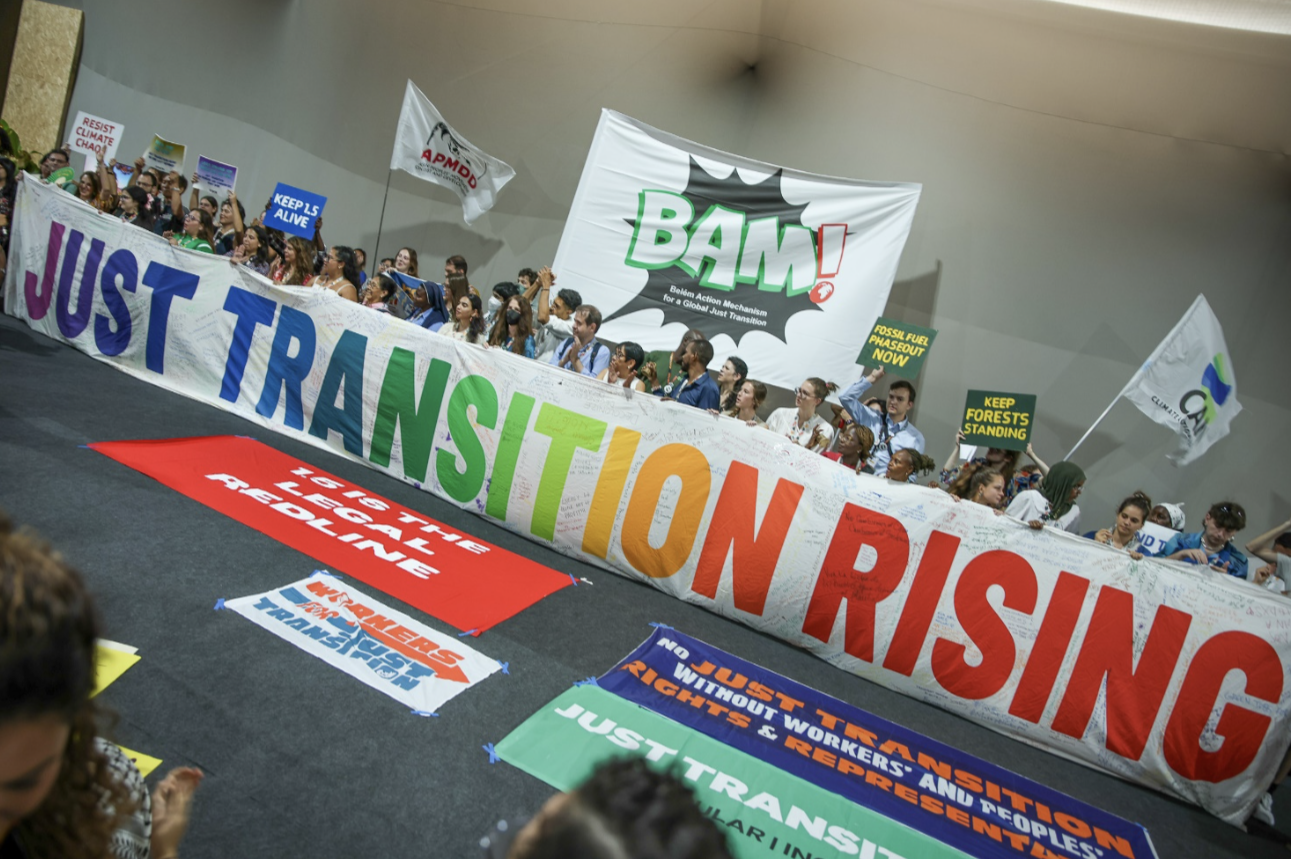
The decision at COP30 to develop a new just transition mechanism is hailed as a historical climate justice decision, while others warn of the lack of concrete commitments and measures. What would a just transition mechanism entail, and how does it add to existing efforts?
As the tumult of this year’s UN climate summit starts to settle, the decision to develop a new just transition mechanism is celebrated as one of the most concrete achievements of the meeting. The mechanism – also referred to as the Belém Action Mechanism, or “the BAM” – is a victory for the cross-constituency coalition that advocated its adoption, as well as Global South countries that supported the initiative. This blog explains what the just transition decision at COP30 entails, and what it adds to the existing debates on just transition within the UNFCCC regime.
What is a just transition, and why is it seen as important?
Just transition refers to the need to implement the sustainability transition in a socially just way that guarantees proper engagement with and support for affected and vulnerable people and communities. The imperative of a just transition was recognised already in the 2015 Paris agreement, but the work on just transition within the UNFCCC regime has gained more momentum in the past few years, thanks to the Just Transition Work Programme established at COP28 in Dubai in 2023.
The stronger focus on just transition comes at a time when climate policymaking is shifting from target setting to the stage of concrete actions, illustrated by COP30 being framed as the “implementation COP”. With rising pressure to implement ambitious net-zero transitions, efforts to secure a socially just transition are seen by many as the key to achieving tangible change. Without actively including and supporting affected groups within the transition, the disruptive changes brought about by climate action risk resulting in political opposition, contestation and even climate backsliding. Implementing a just transition is also considered essential for securing the procedural and substantive rights of affected people and communities, including workers and Indigenous Peoples.
What does the just transition decision from COP30 entail?
1. A step towards a new just transition mechanism
The most concrete outcome on just transition from COP30 is the decision to develop a just transition mechanism, with the mandate “to enhance international cooperation, technical assistance, capacity-building and knowledge-sharing, and enable equitable, inclusive just transitions”. The mechanism would build on the existing Just Transition Work Programme and create a permanent institutional home for international collaborations on just transition within the UN climate regime. As outlined in a proposal developed by the coalition of constituencies ahead of COP30, they would want to see a mechanism with functions spanning from coordination and knowledge sharing, to direct support through a help-desk and channelling of funding to just transition efforts.
However, as of now, the decision has only been taken to start developing the mechanism. The establishment of the mechanism is planned to take place next year at COP31. In the meantime, the concrete design of the mechanism will take place, with an option for Parties and non-Party stakeholders to provide inputs by 15 March 2026. Commentators have warned of the lack of a clear commitment and steps for operationalising the mechanism and the omission of references to funding needs, pointing to the risk of it becoming an “empty mechanism” that would not respond to the concrete needs and wishes voiced by frontline communities. Still, the decision to develop the mechanisms signals stronger political commitments to ensuring the fairness of the transition and to the need for international cooperation in this regard.
2. Clarity on a comprehensive interpretation of a just transition
Beyond the steps taken to establish the institutional mechanism, the recent decision on the just transition provided important clarity on what the international community views as a just transition.
The decision concludes that “multi-stakeholder, people-centric, bottom-up, whole-of-society approaches are required to achieve just transitions”. It highlights the “importance of ensuring broad and meaningful participation involving all relevant stakeholders”, with a comprehensive list of affected groups, and recognises key measures to ensure a just transition, including support for affected workers, social protection and addressing energy poverty. In addition to listing key measures at the national level, the decision also recognises the “importance of strengthening international cooperation on mobilizing, technology and capacity-building support for facilitating the implementation of nationally determined just transitions in a socially inclusive and equitable manner”. This cements the earlier conceptual evolution identified within the UN climate regime, where just transition has moved from a focus on supporting workers in national contexts to encompassing safeguards for all affected groups, also acknowledging the need for international support to implement just transitions.
The decision has further been celebrated for containing historically strong rights language. Indeed, the decision recognizes the “importance of just transition pathways that respect, promote and fulfil all human rights and labour rights, the right to a clean, healthy and sustainable environment, the right to health, the rights of Indigenous Peoples, people of African descent, local communities, migrants, children, persons with disabilities and people in vulnerable situations, and the right to development, as well as gender equality, empowerment of women and intergenerational equity”. While celebrating this win, advocates still underscore that “the struggle for a just transition will not be won at a single conference” and that much remains to be achieved on the ground.
Some topics are also still contested, including the reference to the adverse effects of unilateral trade measures as part of just transitions. This was a topic raised by developing country Parties, but was objected to by the European Union and other developed countries. The debate on unilateral trade measures can be expected to surface again in the coming negotiations on the just transition mechanism.
Where do we go from here?
Despite advances on a just transition, the results of COP30 have generally been met with disappointment, much due to the lack of an agreement on phasing out fossil fuels.In response to this, Colombia and the Netherlands have announced they are hosting the first international conference on the Just Transition Away from Fossil Fuels in April next year. As the initiative highlights, to succeed, a global roadmap away from fossil fuels will have to be underpinned by a sense of local and global fairness. When trust in the COPs is crumbling, the work on a just transition mechanism provides some hope for the process to continue, also within the UN climate regime. In the coming year, governments are expected to show that they can deliver on it.