
Placental Targeting
The placenta plays a central role in regulating the exchange of nutrients, endogenous compounds, and xenobiotics between the mother and the developing fetus. Understanding the molecular mechanisms governing placental transport is essential for improving maternal and fetal health and for developing safer therapies during pregnancy.
Since 2021, we have collaborated with Professor Jaana Rysä (University of Eastern Finland, School of Pharmacy/Toxicology) to investigate diabetes-associated changes in the placental proteome and metabolome. Leveraging samples and data from the Kuopio Birth Cohort (KuBiCo), we aim to identify placental proteins and metabolites that could serve as predictive biomarkers of fetal wellbeing, postnatal development, and adverse pregnancy outcomes. We are also interested in uncovering molecular mechanisms linking maternal diabetes to altered fetal growth and development, including potential sex-specific effects.
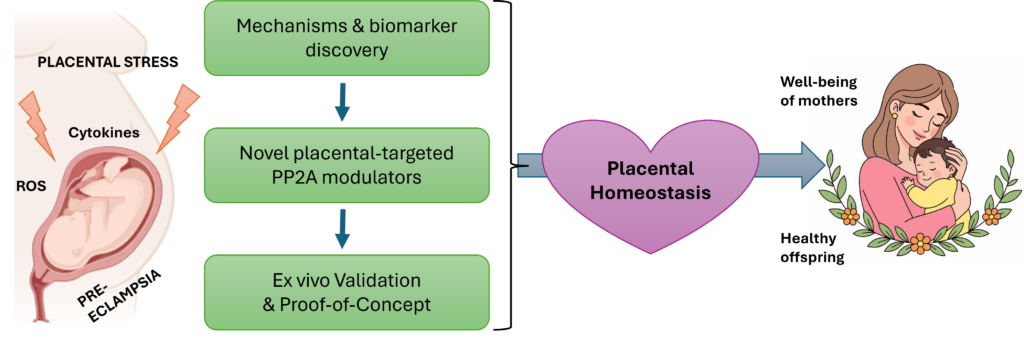
Building on this expertise, we are expanding our research toward transporter-mediated placental targeting and maternal–fetal precision therapeutics. By identifying placental transport pathways that can be selectively exploited for drug delivery, we aim to develop safer and more effective treatments for pregnancy-related disorders while minimizing fetal exposure. Ultimately, our goal is to establish new approaches for precision medicine during pregnancy.
Selected Publications
Swan, J.; Zhurenko, D.; Huttunen, K. M.; Rysä, J. Chemical Disruption of Placental Thyroid Hormone Signalling: A Systematic Review that Highlights Sex-Specific Effects. Archives of Toxicology, 2026, 100(1): 75-93. (REVIEW) https://doi.org/10.1007/s00204-025-04203-z