SB64: Reflections from Bonn
By Sara Tolonen, Doctoral Researcher
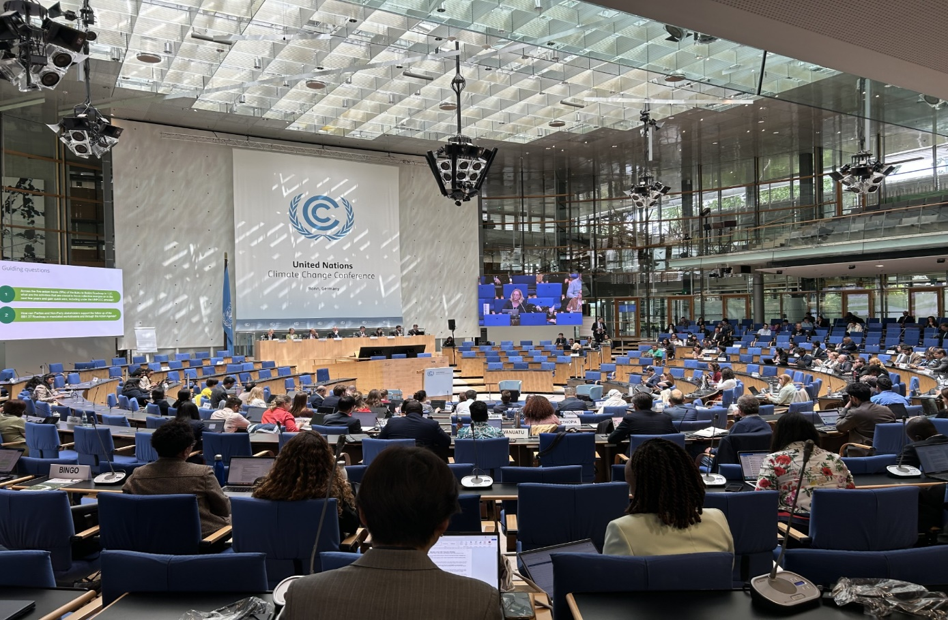
The June Climate Meetings took place in Bonn, Germany, from 8 to 18 June 2026. The negotiations were again shadowed by ongoing geopolitical tensions. The 64th sessions of the Subsidiary Body for Implementation (SBI) and Subsidiary Body for Scientific and Technological Advice (SBSTA) resumed discussions from the Belém Conference of the Parties (COP) held in November 2025. However, negotiations in Bonn started in a somewhat difficult atmosphere, as many Parties had left Belém frustrated by the absence of references to fossil fuel transition in the adopted decisions and by concerns regarding the process through which indicators for the Global Goal on Adaptation (GGA) were agreed.
The agenda covered a wide range of issues, including adaptation, climate finance, just transition, the Global Stocktake (GST), Article 6 implementation, mitigation ambition, climate science, fossil fuel transition, trade dialogues, ocean-related issues, COP reform, and preparations for COP31, among others.
Although the Subsidiary Bodies adopted their agendas swiftly and launched negotiations on the first day, this initial momentum faded as several issues proved highly contentious. Discussions on the Mitigation Work Programme (MWP), GGA, the Adaptation Fund, just transition, and research and systematic observation remained difficult, and in some cases, Parties were unable to agree on texts, which led to the issues being forwarded to the COP31 in Antalya.
Against this backdrop, this blog post briefly discusses three areas that were particularly prominent at SB64: mitigation ambition and preparations for the second Global Stocktake (GST-2) and the next round of Nationally Determined Contributions (NDCs), ongoing discussions on adaptation and climate finance, and developments relating to the implementation of Article 6.
Mitigation ambition and preparations for the next Global Stocktake and NDC cycle
Early assessments in Belém suggested that the NDCs submitted so far are not sufficient to deliver the emissions reductions required under the Paris Agreement, placing increasing importance on the second Global Stocktake (GST-2) and the next round of NDCs to close the ambition gap. Thus the discussions in Bonn focused on the future of the MWP and preparations for the GST-2. Parties agreed that more climate action is needed, but they disagreed on how the MWP should help. Some wanted it to guide stronger climate plans in the future, while others thought it should simply help Parties to carry out the plans they already have. These differing views reflect a broader tension within the Paris Agreement between raising ambition and preserving national flexibility. In practice, the outcome of these discussions will influence whether future processes encourage countries to strengthen their climate targets or focus primarily on implementing existing commitments.
Adaptation and climate finance
Adaptation was arguably one of the most difficult topics at SB64. Discussions on the GGA were marked by persistent disagreements, particularly over adaptation finance. Many developing countries argued that the commitment made at COP30 to triple adaptation finance by 2035 should be reflected in the GGA discussions, while several developed countries opposed including such references. Parties also disagreed on how progress towards adaptation should be measured, including whether the technical work on adaptation indicators should be led primarily by experts or by governments. As no compromise could be reached, negotiations on the GGA were postponed to COP31 in Antalya. More broadly, the discussions highlighted continuing tensions over finance, governance, and responsibility for supporting adaptation in vulnerable countries.
International carbon market and Article 6 Implementation
Article 6 discussions continued to be centred around implementation. Many countries are putting in place the institutional arrangements needed to participate in carbon markets, but challenges remain regarding technical capacity, reporting, and corresponding adjustments. At the same time, debates on authorisation, benefit-sharing, and environmental integrity highlighted that effective carbon markets depend not only on robust methodologies, but also on transparent governance, stakeholder participation, and the ability to deliver genuine mitigation outcomes and sustainable development benefits.
As the pipeline of Article 6 activities continues to expand, attention is increasingly turning to how these arrangements will function in practice. While considerable effort has gone into developing methodologies and safeguards, it remains to be seen whether they will deliver high-integrity climate action in practice and avoid some of the shortcomings associated with the Clean Development Mechanism.
Key takeaways
SB64 demonstrated that the challenge is no longer only agreeing on climate rules, but making them work in practice. While preparations for the second GST and the next NDC cycle are gaining momentum, disagreements over ambition, finance, and equity continue to slow progress. For Article 6, the focus is increasingly shifting to whether carefully designed frameworks can deliver credible and high-integrity climate action. SB64 demonstrated that while many of the rules are now in place, the more difficult task of turning them into effective climate action is only beginning.